ON THE SCENE: Becoming an American
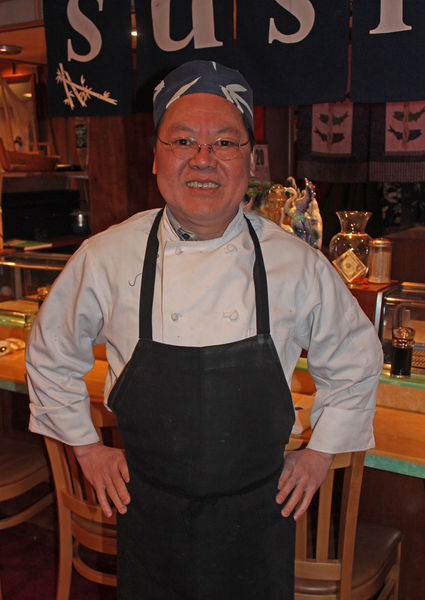
Vincent Le, owner of Hunan Oshaka Restaurant (Provided photo — Naj Wikoff)
If you were to immigrate to another country, what would it take to for you to successfully assimilate in a manner that would result in your feeling gratified by the overall experience and becoming a valued part of the community where you now reside?
Variations on that question are being asked across Europe and by people who gathered at the Keene Valley Congregational Church on Jan. 18 for their Refugee Summit that brought together more than 75 people from 14 communities.
Additional concerns, anticipated by the summit organizers, have been raised on social platforms. Some ask whether our country should even consider welcoming refugees when so many here are living in poverty, working for pay that does not meet the basic needs of sustainable living. And, if brought here, wouldn’t the refugees be taking jobs away from residents?
Such fears are expressed throughout the history of the United States, yet an oft description and reality of the American experiment is that we are a nation of immigrants, a value that is deeply ingrained in our fabric of laws, regulations and customs. Organizers of the summit expressed the need to address challenges faced by residents struggling to make ends meet while welcoming refugees and helping them successfully transition into our society.
If history is a guide, many immigrants who live in Lake Placid have become valued members of the community and established businesses that have employed others. Even so, their transition was not easy.
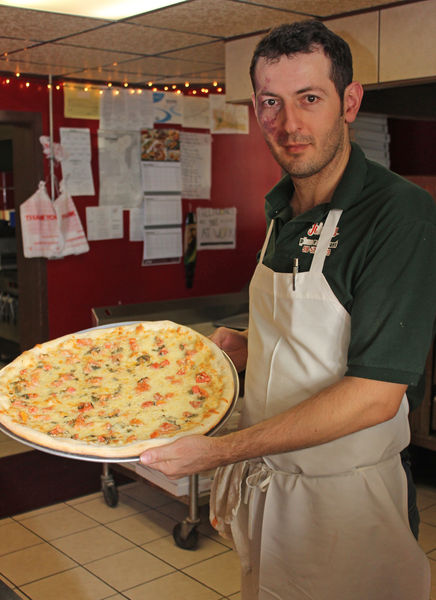
Johnny Cecunjanin, owner of Johnny’s Pizza Restaurante (Provided photo — Naj Wikoff)
I asked some of them, “What advice would you give to others wishing to immigrate to the U.S., and what could we do to facilitate that process?”
—
Johnny Cecunjanin
Johnny Cecunjanin, owner of Johnny’s Pizza Restaurante, is one of the immigrants who came from Bosnia, Montenegro, Croatia and other republics of the former Yugoslavia during the Yugoslav wars in the 1990s highlighted by the bitter fighting and destruction of Lake Placid’s Olympic sister city of Sarajevo. His simple message is that it’s beholden on the immigrant to learn English, embrace the culture of the U.S. and be prepared to work hard.
“I arrived in ’97,” said Cecunjanin. “It was war time. I skipped the war. I didn’t want to do the bad things required in a war. Lake Placid was known in Yugoslavia at that time because of the Olympics. We had family in New York, New Jersey and other states, but we knew of Lake Placid, so we wanted to come here.
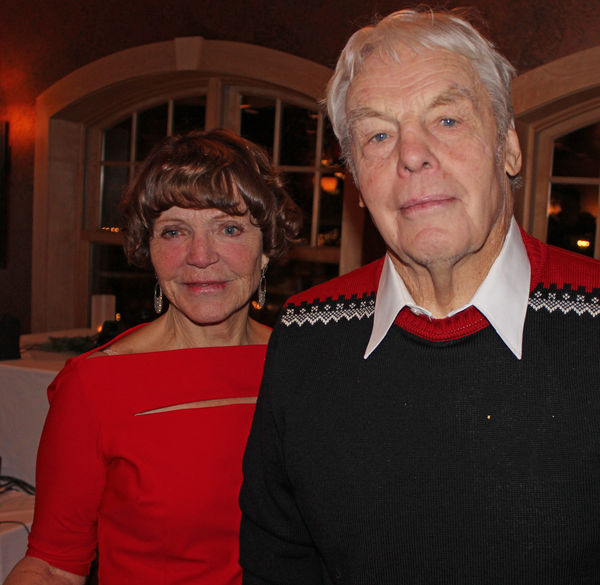
Stefanie and Winfried Holderied, co-owners of the Golden Arrow Lakeside Resort (Provided photo — Naj Wikoff)
“We faced a lot of challenges, First of all, we had to learn the language. Plus it’s hard to get here. You have to work hard and follow the rules. A big challenge is getting immigration papers. It took me 12 years to become a citizen.”
Cecunjanin talked about the benefit of coming with others because they could work together, help each other, look out for each other’s families and because they were friends. He spoke of the importance of staying away from drugs, alcohol and crime. Many of his friends and family started out working on farms, in construction and in restaurants. Cecunjanin said the kind of work available had to do with one’s education level, and because they all didn’t arrive with higher degrees, many had to start with the work they could get.
“Lake Placid has been good for us,” he said. “We have developed friends, have families and work hard. It’s a peaceful community with no crime. It’s now our home. We now have our businesses, hire other people, and try to help others as well. My only wish is that I had a chance to get a good education. I regret it every day. If other immigrants were to come were, my advice is to help them get a good education, I think that’s the most important help we could provide.”
—
Vincent Le
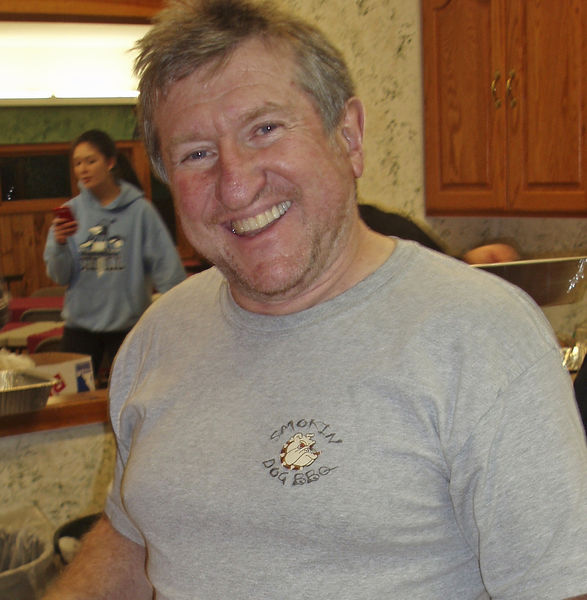
Dmitry Feld, marketing manager of USA Luge (Provided photo — Naj Wikoff)
Vincent Le, the owner of Hunan Oshaka Restaurant, reflected Cecunjanin’s experiences. Of Chinese ancestry, he was born in South Vietnam, where is family lived at the time of the Vietnam War. After the war, they immigrated to Thailand and from there to the U.S. His father was a successful physician in Vietnam, and he didn’t have skills he could use in America. Like Cecunjanin, he had to start by taking what work he could get.
Le arrived with an idea of going into construction. While in trade school, he worked in a restaurant. The owner urged him to go into business, which led to his learning how to be a chef. He worked in a variety of restaurants around the U.S. and Canada before deciding to establish his own business, now located across from the Olympic Speedskating Oval. Le stressed the importance of hard work, getting an education and embracing the culture.
“First thing, you’ve got to learn the language,” said Le. “You’ve got to get an education. It’s important to decide what you want to do. We had some relatives here, and they helped me learn the customs. I had to become more friendly and outgoing like Americans. I had to learn to be helpful. I wanted my employers to view me as a partner.”
—
Stefanie and Winfried Holderied
“You learn English, and do what’s expected of you in a new country,” said Stefanie Holderied, co-owner of the Golden Arrow Lakeside Resort with her husband Winfried. “In other words, you don’t expect them to change to your culture. You need to accept theirs, to adjust and become part of the country where you are now living.”
The Holderieds moved to the U.S. from southern Germany in 1955, meeting in an English language class before getting married. They first visited Lake Placid in 1963 and moved here in 1964, buying the Golden Arrow Motor Inn from local attorney Ronald Urfirer in 1974.
“I feel that if you are going to immigrate into a new country, you have to accept that country for what it is,” said Stefanie.
—
Dmitry Feld
Dmitry Feld, an immigrant from the former Soviet Union who was active in helping the first refugees from Montenegro, said, “One of the things that helps immigrants assimilate is their children going to school, learning English, having American friends and going on to college. Sometimes it can be a little harder for the adults. I arrived speaking no English, and people made an effort to understand me.”
Born on the Kamchatka Peninsula in far-east Russia in 1955, Feld was the son of a soldier. His family had moved to the Republic of Ukraine years before he moved to the U.S. in 1979 and Lake Placid in 1984. He is now the marketing manager at USA Luge.
Not every immigrant finds the U.S. to be their cup of tea. A fair number try elsewhere or return to their home country when the situation there gets better, as is now happening with many Mexicans. Yet many who found Lake Placid decided to permanently make the Olympic Village their home.
“The United States is not for everybody,” said Feld, “but it’s good for me!”
- Johnny Cecunjanin, owner of Johnny’s Pizza Restaurante (Provided photo — Naj Wikoff)
- Stefanie and Winfried Holderied, co-owners of the Golden Arrow Lakeside Resort (Provided photo — Naj Wikoff)
- Dmitry Feld, marketing manager of USA Luge (Provided photo — Naj Wikoff)
Columns
ON THE SCENE: Before there were trees
MARTHA SEZ: ‘This is what happens to the elderly brain, mine included’
Biff says he knew the war our country is now conducting with Iran didn’t surprise him one bit. It was in the ...
ON THE SCENE: Olympians on the Olympics
MARTHA SEZ: ‘Then there is the sad but true … story of the cow in the cemetery’
Every once in a while, I look back at columns I’ve written over the years and reminisce. There was the time, ...
LIONS CLUB LOG: Lions Club meets LPHS senior Joselyn Hernandez
The Lake Placid Lions Club has had a busy start to the 2025-26 seasons involving the Annual Radio Auction, ...