
ON THE SCENE: Olympians on the Olympics
- From left are Olympic biathletes Andrea Henkel Burke and Tim Burke. (Provided photo by Naj Wikoff)
- From left are local Olympians, ski jumper Jay Rand and Apline skier Andrew Weibrecht. (Provided photo by Naj Wikoff)
- From left are Olympic medalists, figure skater Paul Wylie and luge athlete Mark Grimmette. (Provided photo by Naj Wikoff)
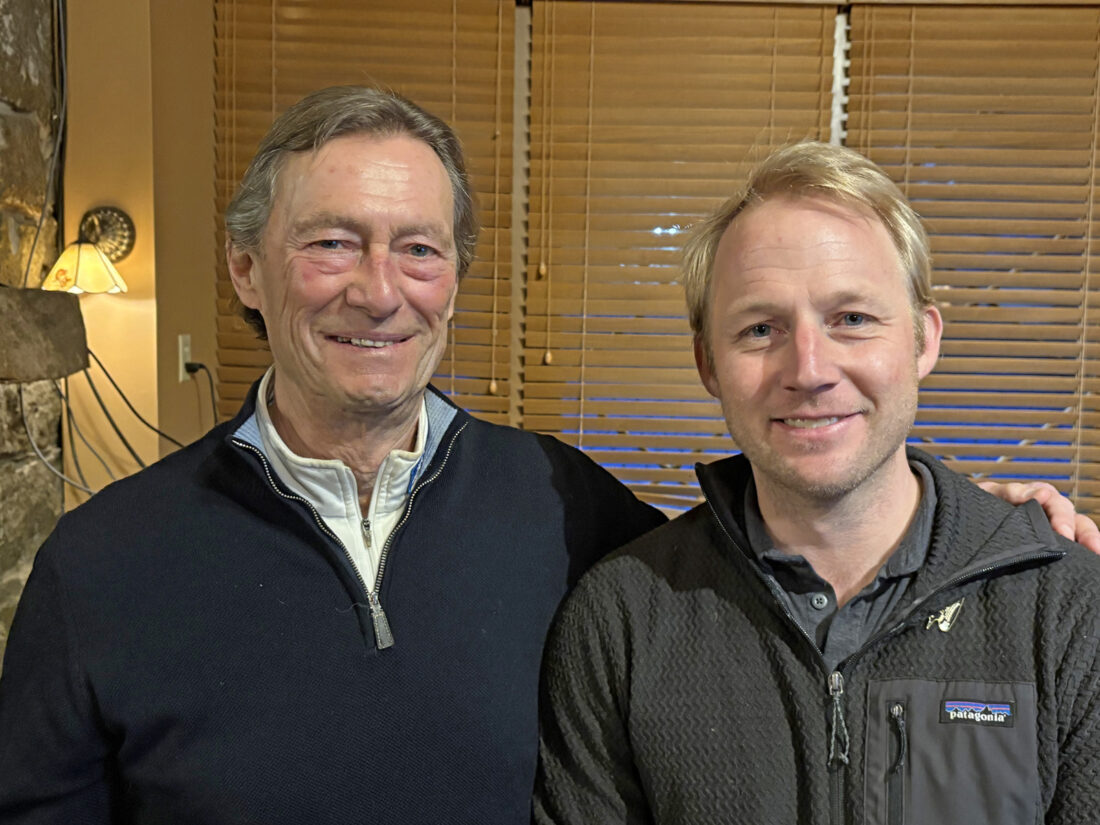
From left are local Olympians, ski jumper Jay Rand and Apline skier Andrew Weibrecht. (Provided photo by Naj Wikoff)
Six of the many people from our region who have competed in the Winter Olympics, most medalists, shared their experiences and thoughts Thursday evening, Feb. 19, at a reception and roundtable held at the Mirror Lake Inn.
Organized by two-time Olympic medalist Andrew Weibrecht, a benefit for the New York Ski Educational Foundation, the session also included four-time Olympic medalist in biathloån Andrea Henkel Burke, four-time Olympic biathlete Tim Burke, two-time Olympic luge medalist Mark Grimmette, Olympic ski jumper Jay Rand and Olympic figure skating medalist Paul Wylie.
The Lake Placid region has sent athletes to every Winter Games, beginning with Charlie Jewtraw, who won the first gold medal awarded at the first Winter Olympics in Chamonix, France, in 1924. In addition, many athletes who came to train or compete in Lake Placid now live here. Not surprisingly, given the community’s Olympic venues, the region has sent athletes to the Olympics across a wide array of winter disciplines.
For athletes like Tim Burke, Alpine skier Tommy Biesemeyer, Nordic combined Billy Demong, current Olympian jumper Tate Frantz, and many others, NYSEF has been a vital training and launch pad for careers in winter snow sports, as has Northwood School, an important partner of NYSEF. To that end, Weibrecht opened his remarks by sharing how vital NYSEF was to his development as an athlete and person, and invited people to be generous.
“I grew up in Lake Placid, and I’m a product of the New York State Ski Educational Foundation,” said Weibrecht. “I started with NYSEF when I was 5 and participated in the program until I was 16 and made the U.S. National Team.”
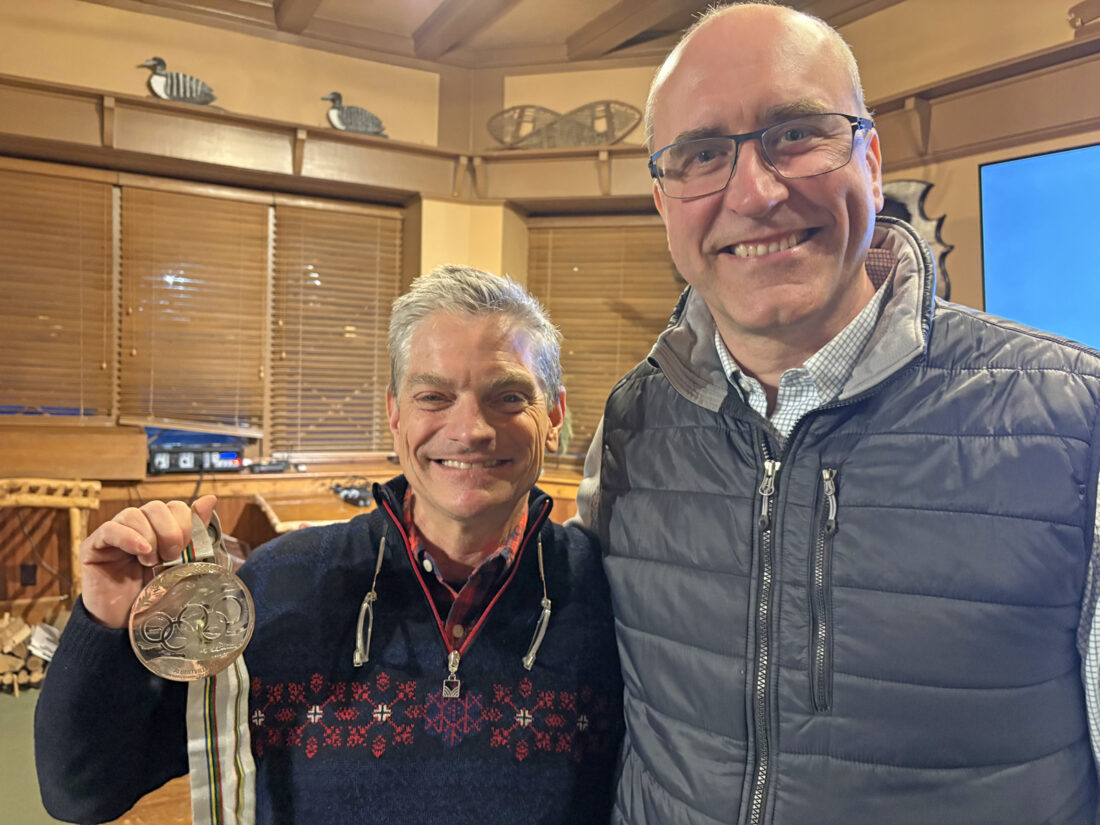
From left are Olympic medalists, figure skater Paul Wylie and luge athlete Mark Grimmette. (Provided photo by Naj Wikoff)
Weibrecht briefly recapped his Olympic career and, as did the others, shared how he got into the sport. He also noted that, unlike Lindsey Vonn, though also in his early 40s, he has no plans to return to competitive racing.
Rand started jumping at 4 and competed in the Olympics when 17. Now, Andrew’s father-in-law was pleased to note that his granddaughter, whom he referred to as War Pony, a second-generation Weibrecht with NYSEF, has taken a liking to ski jumping and shows great promise.
Paul Wylie, the first native-born Texan to win a Winter Olympic medal, shared how he was written off by many as not even worthy of being at the Olympics, with commentators asking why he was even there after barely making the team, but, to the surprise of many, he won silver.
Andrea Henkel Burke, who raced for Germany before moving to Lake Placid, won the most Olympic medals; two golds, a silver and a bronze, along with eight World Championship titles, 46 World Cup races. She is the first biathlete to win world championship titles in all individual events. She shared how excited she is to have the chance to see the world’s best biathletes in a couple of weeks at the World Cup being held at Mount Van Hoevenberg.
Described by his wife as the one who brought her here, Tim Burke, who tried many different sports growing up, remembers, at age 12, watching a biathlon event at Mount Van Hoevenberg and how excited he was to learn about a sport that combined two of his passions. He immediately joined NYSEF and went on to compete at the World Cup level for 14 years, including four Olympics.
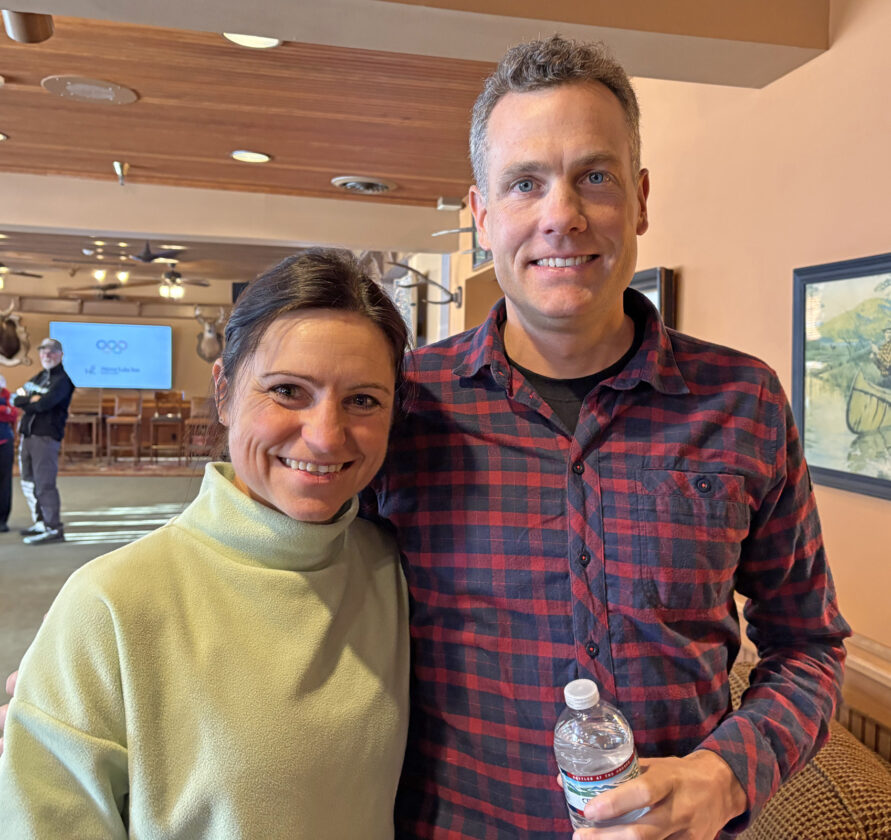
From left are Olympic biathletes Andrea Henkel Burke and Tim Burke. (Provided photo by Naj Wikoff)
Mark Grimmette, who competed in five Winter Olympics, grew up in Michigan and was introduced to luge when a recreational track was built in a park across the street from his home, an interest that led him to Placid, which was the center of training. He never left.
Following the athlete’s introductions, Weibrecht opened the session to questions from the attendees, including what goes on behind the scenes that people don’t see on television. Another was what was a special moment, not connected to their race or winning a medal. A third was, what did you learn from the experience of being an Olympian, and how has it changed your life?
Responding to the first question, Grimmette said critical was being flexible because many of your normal training and support activities, like transportation, living quarters, training times, and food is controlled by others. Tim Burke agreed, saying that even while competing in different countries, athletes are used to routine, which is greatly impacted by the coming together of so many athletes in such a wide variety of sports, along with greatly increased media attention, which upends their normal routines.
“All the venues at an Olympics are now a bit different,” said Andrea Henkel Burke. “You may have competed on them many times before during World Cups, but they have been altered. You now have to figure out how they are different.”
“You are so used to doing your own thing, but at the Olympic Village, you are now part of a team,” said Paul Wylie. “Yet, my roommate was my competitor. It was neat because there was this camaraderie, yet you are competing against each other.”
In terms of a special moment, Grimmette said, “In 2002, I was one of eight athletes chosen to carry in the World Trade Center flag. We walked in with members of the New York City fire and police departments. As we walked into the stadium, the noise of 50,000 people went quiet. You could hear a pin drop. My hair stands on end thinking about it.”
“Thinking back to 1968, a special moment, special time for me is that I shared that whole experience with my Northwood classmate Ulf Kvendbo, the late Ulf Kvendbo now, who made the Canadian team,” said Jay Rand. “He was a very special friend. The other was getting to Grenoble from Chamonix, riding in a mini-Fiat with the top down, four people in the car, driven by an Italian going 100 mph.”
Since he was 8, Weibrecht’s goal was to ski in the Olympics, which he achieved at 24.
“What I learned the most was the power of the process and the power of consistency,” said Weibrecht. “If you have a process-based approach to doing something, how do you eat an elephant or a whale, one bite at a time; that’s exactly what it is. I learned how to get incrementally and marginally better enough times over that I went from what I was at 8 years old to the higher echelons of sport. The power of consistency, the power of routine go hand in hand in many ways; it’s waking up every day and doing the work that needs to get done.”
Weibrecht said what’s critical is being able to look at yourself objectively so you can make the adjustments as you move forward. Wylie agreed, noting that progress is rarely in a straight, smooth line. Wylie said he made the Olympic team by receiving a single point from a single judge. He said his choice in the three and a half weeks before the Olympics was to get the clothes and have a good time, or redeem the opportunity given him by pushing himself to the utmost. He chose the latter.
“The one thing my career taught me was resilience,” said Tim Burke. “Every athlete who achieves the Olympics experiences times when they are down, whether it’s injury, sickness, or when things aren’t flowing. More often than not, things don’t go well. That taught me so much about coming back and learning from that experience; that’s why I am such a fan of kids getting into sports because it teaches them so much.”
“You never stop learning,” said Mark Grimmette.
“It was wonderful having all those icons of sport, under one roof in a small, intimate room, honestly and humbly, sharing their experiences,” said former Olympic Regional Development Authority CEO Ted Blazer. “It was a joy to hear them. They were here for us; they are all intertwined in our community. This is their home, we are family.”
(Naj Wikoff lives in Keene Valley and has been writing his column for the Lake Placid News since 2005.)
Columns
MARTHA SEZ: ‘Then there is the sad but true … story of the cow in the cemetery’
Every once in a while, I look back at columns I’ve written over the years and reminisce. There was the time, ...
LIONS CLUB LOG: Lions Club meets LPHS senior Joselyn Hernandez
The Lake Placid Lions Club has had a busy start to the 2025-26 seasons involving the Annual Radio Auction, ...
ON THE SCENE: Mountainfest magic in town of Keene
MARTHA SEZ: ‘You were born in a Pig year, but don’t think of yourself as a pig’
Yippee-ki-o-ki-yay, galloping all the way, here comes Year of the Horse! My apologies to Hanna-Barbera Animation ...
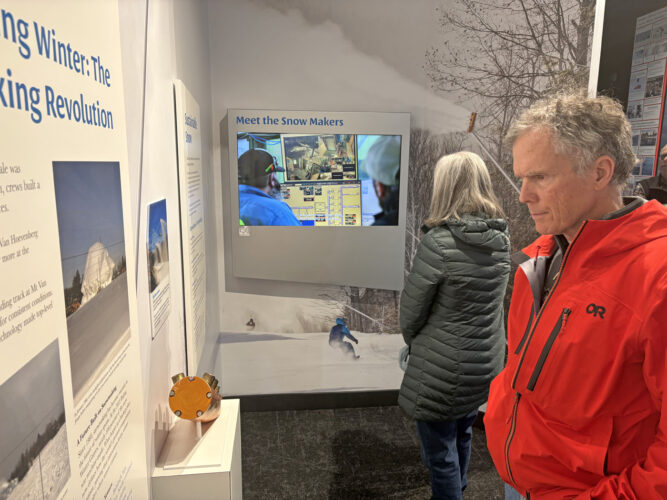
ON THE SCENE: ‘Snow on Demand’ for winter sports
MARTHA SEZ: ‘Artificial intelligence is coming out ahead’
By MARTHA SEZ I watched Bad Bunny’s Super Bowl halftime show on YouTube, but not until this morning because I ...