ON THE SCENE: New Olympic Museum opens to great applause
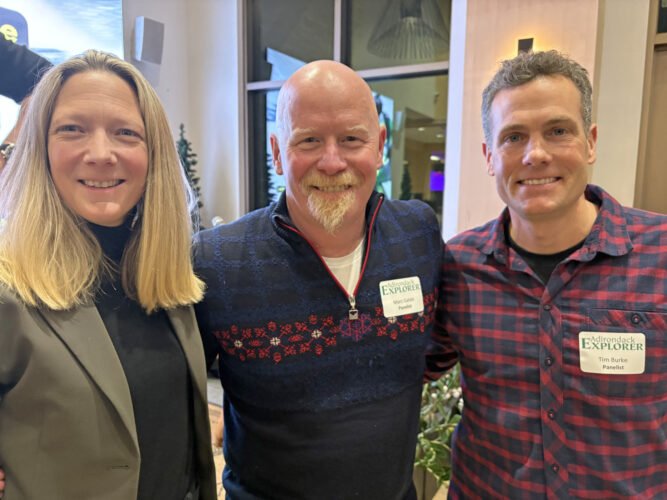
- Mike Pratt and Julia Herman (Provided photo — Naj Wikoff)

From left are Fotini Galanes of Hadley Exhibits, Lake Placid Olympic Museum Board President Jonathan Becker and Ted Johnson, president of Hadley Exhibits. (Provided photo — Naj Wikoff)
The newly reconfigured and updated Lake Placid Olympic Museum on the first floor of the Olympic Center’s Miracle Plaza is a wow.
The size has doubled and has been reimagined, leading visitors through the history of the Olympic Winter Games interwoven with the history of winter sports in Lake Placid.
“The museum provides an experience that visitors and locals will be impressed,” North Elba town Supervisor Derek Doty said on Wednesday, Dec. 7 during a VIP preview of the museum, which opened to the public the following day. “The layout is great, all the information is much more than previously on display, and it tells our history in a wonderful way.”
The museum is filled with interactive displays that give visitors the thrill of going off an Olympic ski jump, down the bobsled run, and learning what it takes to be an internationally ranked speedskater. The displays draw the visitor in, providing more detail the more one dives into an exhibit. The result is that it’s nearly impossible to fully take all the experiences and information in during one visit; you leave wanting to return, desiring to learn more.
The design team was led by Ted Johnson and Fotini Galanes Hadley Exhibits of Buffalo, working closely with the museum’s board and staff, led by museum Director Alison Haas, along with the Olympic Center staff and insights provided from former Olympians such as Alpine skier Andrew Weibrecht and figure skater Paul Wylie.
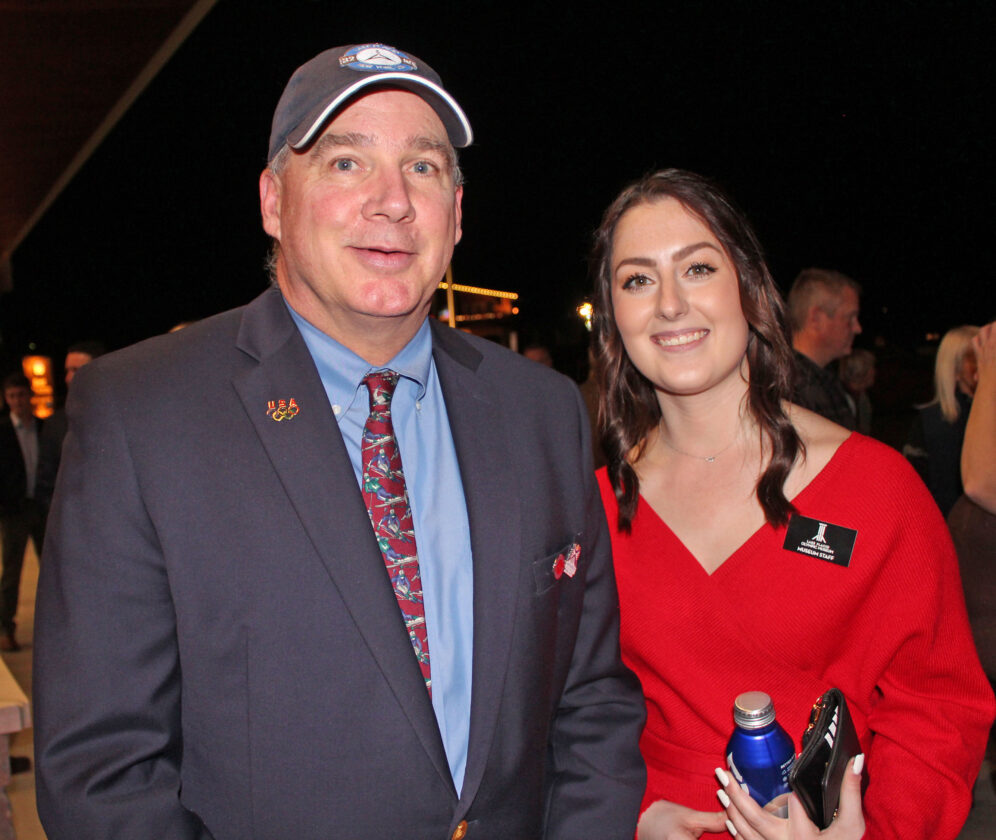
Mike Pratt and Julia Herman (Provided photo — Naj Wikoff)
“We wanted to make the space feel bigger and take people on a journey,” said Johnson. “The Olympics have been central to many people who live and train here, and we wanted to tell the story of what happens and how it happens. For example, as part of the exhibit, we wanted to help visitors understand what the athletes give up to compete at that level. This exhibit will help people see the Games and the community’s involvement differently.”
Glorious as it is, the evolution of the Lake Placid Olympic Museum is the outcome of a determined 42-year effort led by a variety of passionate volunteers such as Keela Rogers, Vern Lamb and Phil Wolff (chief of staff of the 1980 Lake Placid Olympic Organizing Committee).
“The first Winter Olympic Museum was located in the Austria House across from St. Agnes Catholic Church in 1981,” said Keela Rogers, a founder and long-serving board member of the museum. “The newly upgraded museum represents its third incarnation. We got our charter from the Board of Regents, went broke and lost it. And then, thanks to a lot of lobbying by Ned Harkness, Vern Lamb and others, we got this location. ORDA needed office space upstairs, and we got part of the ground floor.”
As one of his responsibilities, Wolff oversaw the archives, then led by Ruth Mary Hart, who was documenting the 1980 Games and preserving key artifacts. Now based at the state Olympic Regional Development Authority, which operates the museum, a new charter was acquired, and Wolff became the founding president of the 1932 & 1980 Lake Placid Winter Olympic Museum, which has since been renamed the Lake Placid Olympic Museum. Wolff’s son David described his father’s support for the museum as unrelenting, adding that Keela Rogers was equally passionate and involved.
“The museum is magnificent,” said Todd Westhaus, deputy director of state operations, Gov. Hochul’s representative at the opening reception. “The state and local stakeholders have invested significantly in upgrading the Olympic venues. Unveiling this museum, we are celebrating the history of winter sports in Lake Placid and the economic opportunities that come with something like this. The Olympic venues are now world-class facilities that will draw more athletes to the area. The museum is no less of a fantastic attraction for visitors in its own right.”
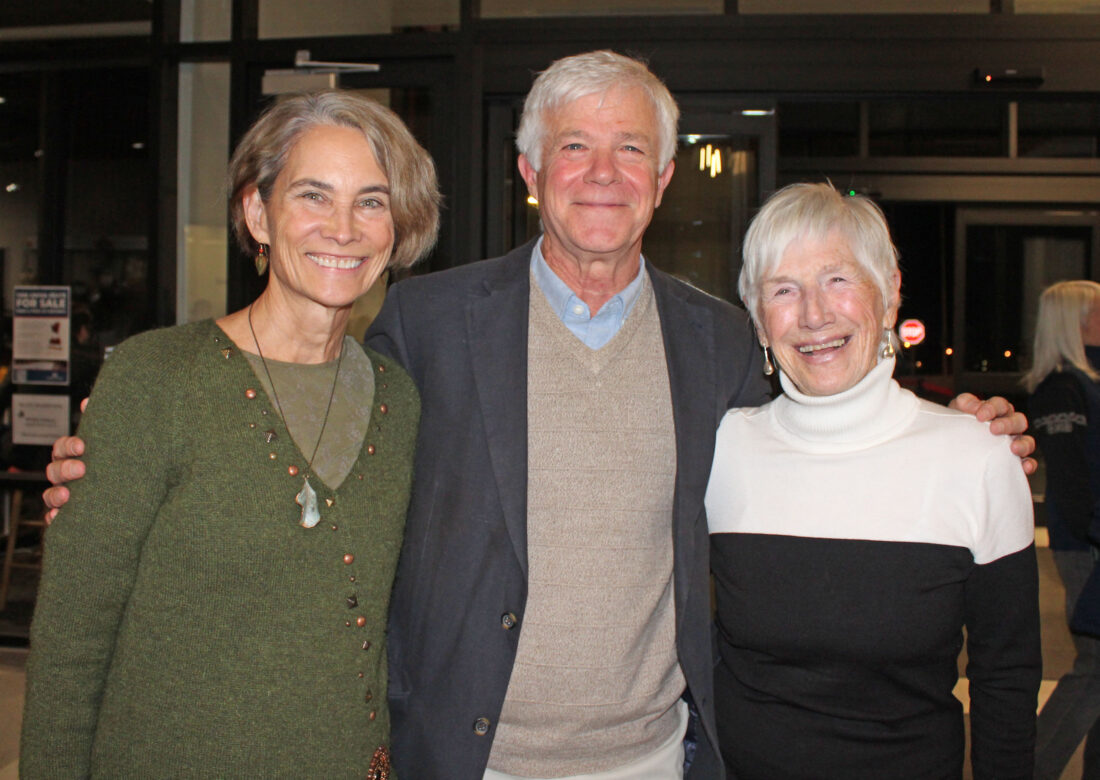
From left, Kathleen and Joe Martens pose with Georgia Jones. (Provided photo — Naj Wikoff)
Westhaus went on to say how impressed he was to learn about the growing science behind every sport and how tough the early athletes were. He noted that in the early days, such as in bobsledding, safety measures were not as robust as today; skis were longer and heavier, helmets were not as protective, and financial resources were far more limited.
No person has given more tours of the Olympic Center than Keela’s husband, Jim Rogers, a member of the LPOOC in 1980. He said that he was “flabbergasted” by the revitalized museum and all the information displayed within.
Two-time Olympic medalist Andrew Weibrecht, of Lake Placid, praised the way the exhibits were organized.
“I like the way they created a flow that encourages people to look deeply at the exhibits and the way the information and artifacts are displayed,” said Weibrecht. “I’m excited by the quality of their work; it features a good mix of fun and elegance.”
Caroline Welsh, the former chief curator of the Adirondack Museum in Blue Mountain Lake (now called Adirondack Experience), agreed.
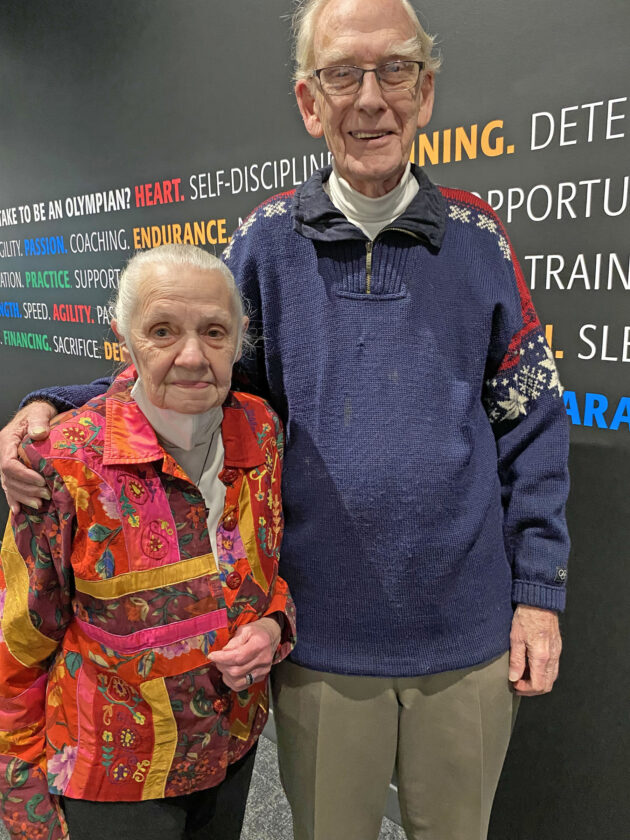
Keela and Jim Rogers (Provided photo — Naj Wikoff)
“The subject matter is beautifully organized and presented,” said Welsh. “I very much want to applaud ORDA for making this investment.”
“This place is so special,” said Mike Pratt, president and CEO of ORDA. “I am so proud of what we accomplished here. This museum and these venues are for the community, and what makes this place special is all the people.”
The design team, museum board and staff rebuilt the museum from the ground up. By doing so, they rethought the layout and the story they wished to tell in an interactive and engaging manner.
Julia Herman, the museum’s collections manager, praised the support they got from the ORDA board, staff and the crucial investment made by the state.
“Since the early days of the 20th Century, winter sports have been an integral part of the fabric of Lake Placid,” said Jonathan Becker, president of the museum’s board. “The Lake Placid Olympic Museum is now one of the world’s top museums. This could not have happened without the help and expertise of individuals willing to give immeasurable time to the project. Ted Johnson and Fotini Galanes of Hadley Exhibits were invaluable in translating our dream into reality.”
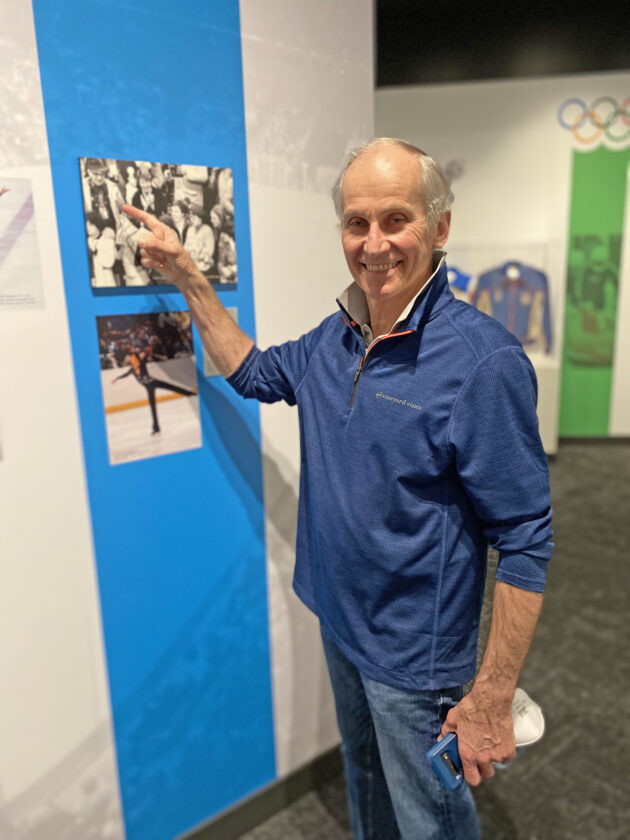
David Wolff points to a picture of his father, Phil Wolff. (Provided photo — Naj Wikoff)
“The museum defines description; it’s beautiful,” said Joe Martens, chair of the ORDA Board. “I walked through and experienced it for the first time tonight; I was blown away. It’s super professional. The interactive exhibits are huge and cover many facets of Olympic history. I plan to come back and spend hours in the museum. You can feel how important winter sports and the Olympics are to the community.”
(Naj Wikoff lives in Keene Valley. He has been covering events for the News for more than 15 years.)
Columns
ON THE SCENE: ‘Snow on Demand’ for winter sports
MARTHA SEZ: ‘Artificial intelligence is coming out ahead’
By MARTHA SEZ I watched Bad Bunny’s Super Bowl halftime show on YouTube, but not until this morning because I ...
ON THE SCENE: 1980 Olympic hockey coach Herb Brooks honored
MARTHA SEZ: ‘Groundhog Day is, after all, a very minor holiday’
As I write this, Groundhog Day has just come and gone, leaving many in the North Country confused and slightly ...
LIBRARY NEWS: AARP volunteer tax help begins at Lake Placid Public Library
The Lake Placid Public Library offers support for many new years’ needs, including tax preparation, wellness ...