VISITING LAKE PLACID : Big water means big fun on Lake Placid lake
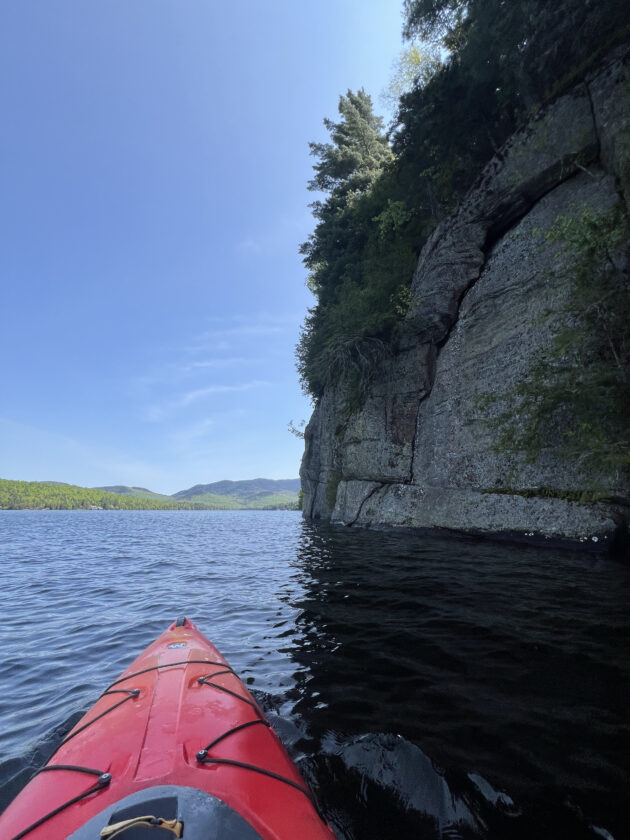
Pulpit Rock is seen from the waters of Lake Placid's East Lake on Tuesday, June 3. (News photo — Chris Gaige)
LAKE PLACID — There’s no shortage of aquatic options coming to the village of Lake Placid or surrounding communities throughout the Olympic Region. Whether it’s big lakes, small ponds, lazy rivers or raging rapids, the Adirondacks are a paddler’s dream.
Having had the opportunity to put my kayak in numerous surrounding waterbodies throughout the Adirondack Park over the years, one had been missing from my list — despite it being a stone’s throw from where I live in downtown Lake Placid.
This is not the lake whose shores rises directly above the village’s business district. That’s Mirror Lake and its smaller size, immediate proximity to downtown and preclusion of motorized watercraft mean that it gets the bulk of the attention for paddlers. Less than a mile away, however, lies Lake Placid lake.
Despite being almost 20 times as large as Mirror Lake, Lake Placid is a hidden gem of sorts. There are multiple public access points, including off Victor Herbert Road and George & Bliss Lane, but the lake is largely tucked away. Roads only encircle a portion of the lake’s shoreline — many of which are private. There are three islands — Buck, Moose and Hawk — which are, to state the obvious, only accessible by water.
While Lake Placid lake partially borders the McKenzie Mountain Wilderness, and feels a world away from the village, to call it remote wouldn’t be accurate either, at least when compared to many other waterbodies in the Adirondacks. Much of the lake is dotted with spectacular camps and on hot summer days, the waters are often abuzz with motor boat traffic. It’s a unique combination of sorts, and one that’s worth exploring.
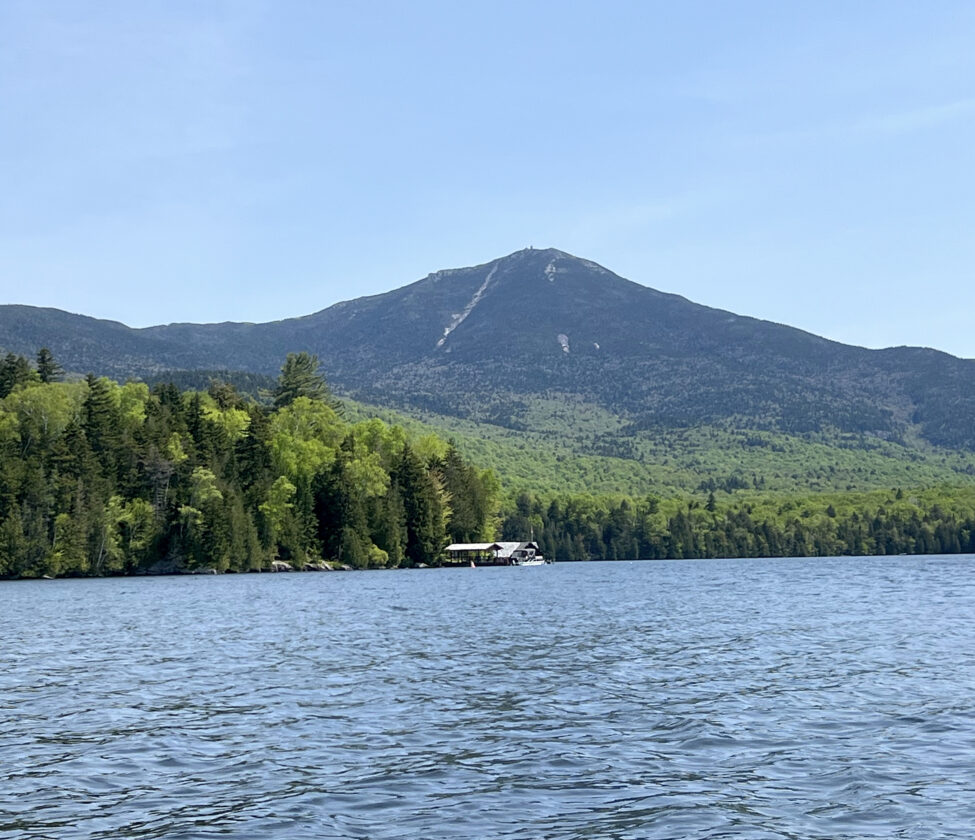
Whiteface Mountain is seen from the waters of Lake Placid's East Lake, with the shoreline of Hawk Island — the smallest and northernmost of the lake's three islands — on Tuesday, June 3. (News photo — Chris Gaige)
I began my trip at the boat launch off of Mirror Lake Drive at 10 a.m. Tuesday, June 3. Traffic was quiet, the waters were living up to their name and the sun was shining. After having my boat inspected for aquatic invasive species (none were found!) I set off, sticking close to the lake’s eastern shore.
The channels between the three islands divide the lake into two lobes: East Lake and West Lake. While a full day’s time would have allowed for a circumnavigation, I was pressed for time and had to race to Hawk Island — the farthest from the boat launch and the smallest — and back. Despite not taking in the whole lake, what I saw was nothing short of stunning.
After a week of rain, the surrounding landscapes were lush. McKenzie and Moose mountains towered above the lake to the west. The shoreline varied between gentle slopes, often with a boathouse and camp above it, wild forest and jagged rocks. After passing by Pulpit Rock, which rises hundreds of feet directly out of the water, I crossed East Lake to Cape Marie at the northeastern point of Buck Island between Hawk and Buck. I crossed Shelter Strait and paddled along Moose Island’s eastern shore, where iconic views of Whiteface Mountain are on full display.
As a side note, advanced adventurers looking to incorporate a full day of hiking and paddling can canoe or kayak to Whiteface Landing at the northeast corner of Lake Placid lake and then pick up the hiking trail to Whiteface Mountain. It’s about 3.5 miles each way to Whiteface’s summit from the lakeshore, and the trail gains just over 3,000 vertical feet — requiring ample time and strong physical condition.
For those looking to make it a multi-day trip, or just find a nice picnic spot to break up the paddle, there are two public lean-tos on Moose Island’s northeast side. After making a quick pass over to Hawk Island, I turned around, this time crossing over to East Lake’s eastern shore near Hawk Island to differentiate my return route and take in some new scenery.
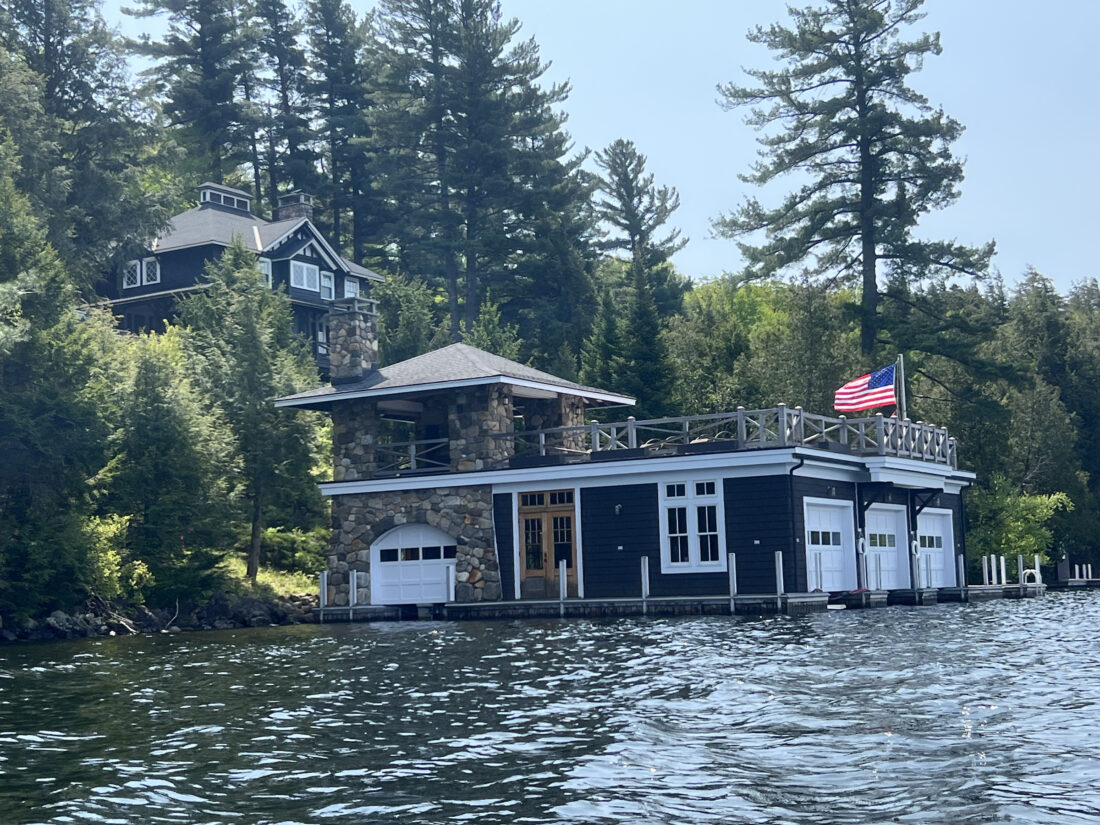
Camp North Carolina is seen from the waters of Lake Placid's East Lake on Tuesday, June 3. It's one of the many stunning properties that dot Lake Placid's shorelines. (News photo — Chris Gaige)
Boaters are greeted with panoramic views of the Sawtooth and Seward mountain ranges when facing south, along with numerous other surrounding peaks. The quiet Tuesday morning waters provided for a serene and peaceful paddle on the lake’s northeast side, one of its more remote areas.
Having made a faster trip to Hawk Island than I planned on, I took a more relaxed pace on the way back, giving myself time to admire many of the remarkable camps, some of which are over a century old. Before I knew it, I was back to the boat launch. In all, it took about 90 minutes moving at a generally earnest pace. My trip was about 6.5 miles, elongated by the cut-acrosses and following the curvy shoreline, rather than taking a direct point-to-point paddle.
Lake Placid lake makes for an excellent adventure, but it’s one that I would say demands diligent planning sufficient previous paddling experience. Lake Placid’s large size can lead to rough waters if there’s a wind, and its motor boat use, especially at busy times, requires paddlers to be able to navigate potentially large wakes and always stay aware of their surroundings.
Mirror Lake provides an opportune venue for those newer to paddling to hone their skills before moving on to bigger lakes. There’s a boat carry between the two lakes, sharing the same parking lot as Lake Placid’s boat launch off of George & Bliss Lane.
As always, be sure to check your watercraft for any aquatic species, and remove and discard those on land before reentering the water. Doing so helps stop the spread of invasive aquatic species, some which have been ecologically devastating to many Adirondack lakes.
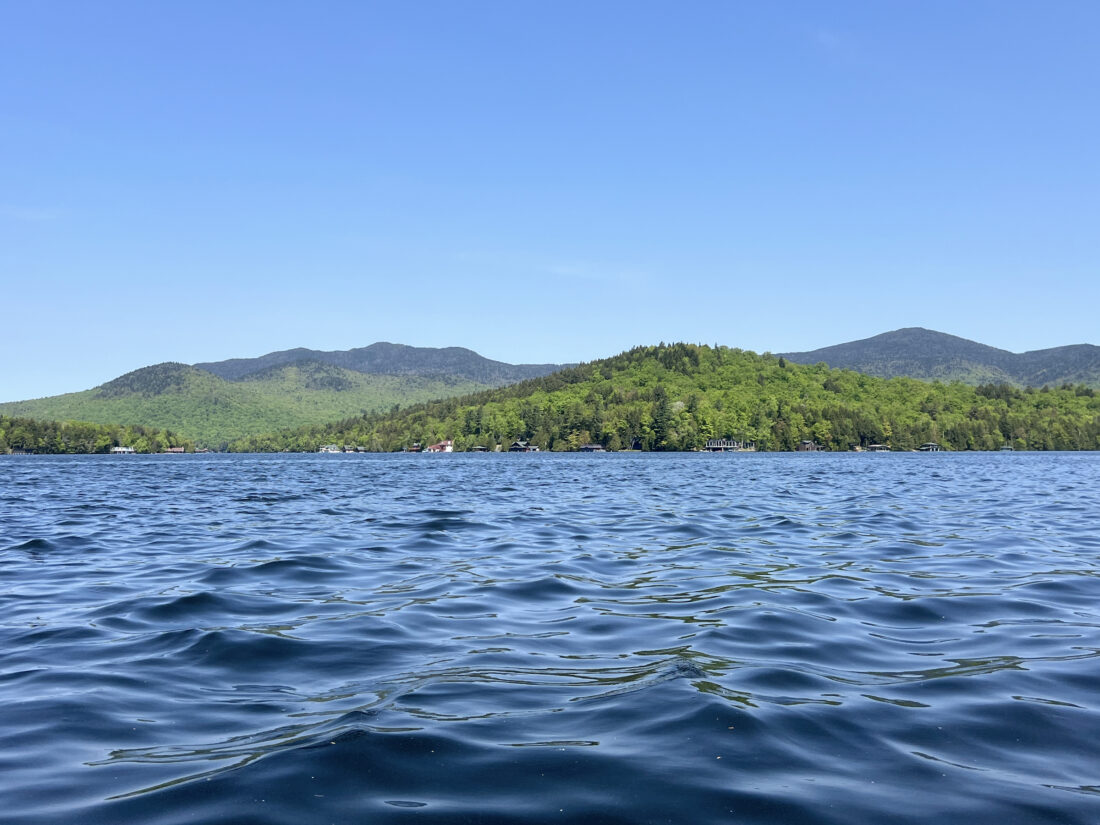
From left, Sandy Point, Sunset Strait and a southern portion of Buck Island are seen in the foreground. McKenzie Mountain, left, and Moose Mountain are seen in the background from the waters of Lake Placid's East Lake on Tuesday, June 3. (News photo — Chris Gaige)
For those visiting Lake Placid without a boat, there are numerous outfitters and rental outlets in and around town.
Boaters should always wear a personal flotation device, commonly referred to as a “life jacket.” This holds true for everyone, regardless of skill level. In New York you are legally required to have one PFD per person in or on your boat. The PFD must fit the person, be readily accessible, and be free of any damage or tears. Children under 12 must always wear a PFD while boating. Everyone, regardless of age, must always wear a U.S. Coast Guard-approved PFD on pleasure vessels under 21 feet in length — powered and non-powered — between Nov. 1 and May 1.
PFDs save lives. If you are not legally required to wear one and are considering whether or to, you should be especially mindful of the enhanced dangers presented by high boat traffic, cold weather, severe weather, rough waters, nighttime boating, poor swimming skills and situations where rescue assistance is unavailable or would take a while to reach your boat.
Boaters should also take care to secure any personal items before heading out.
Garbage should never be left in the water. Always make a plan to contain it and carry it out. Cellphones and devices or materials that could be damaged by water or sink should be secured in a waterproof and buoyant compartment of sorts.
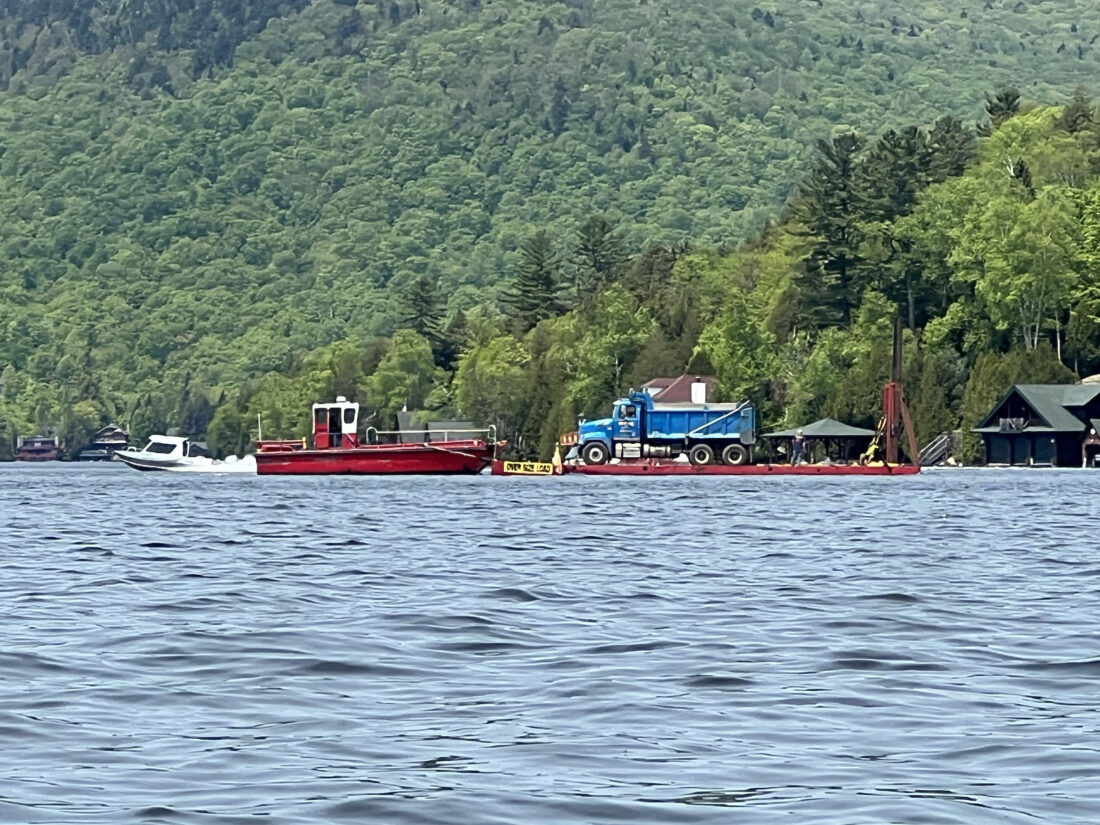
A commercial dump truck is ferried across Lake Placid's East Lake on Tuesday, June 3, presumably to deliver construction materials for a project at one of the lake's many properties without road access. (News photo — Chris Gaige)
Boaters should check the weather and pay attention to the wind before heading out. On blustery days, waves on Lake Placid lake could capsize canoes or kayaks, especially for those with less experience or who are in narrow boats that could tip over more easily. Know yourself and your boat, and plan ahead for this. In general, winds tend to be strongest in the afternoons. This can make sunrise or evening paddles an enticing option.
If there is a wind, boaters should also be prepared for a headwind on their return. In other words, it’s easier to ride with the breeze, but make sure you can paddle against it when you have to turn back to where you began in order to avoid becoming stranded and potentially needing a rescue.
Lake Placid lake makes for an excellent paddling destination for those with previous experience and are in strong paddling shape. The lake’s large size and stunning scenery is perfect for an all-day adventure on a warm, sunny day.
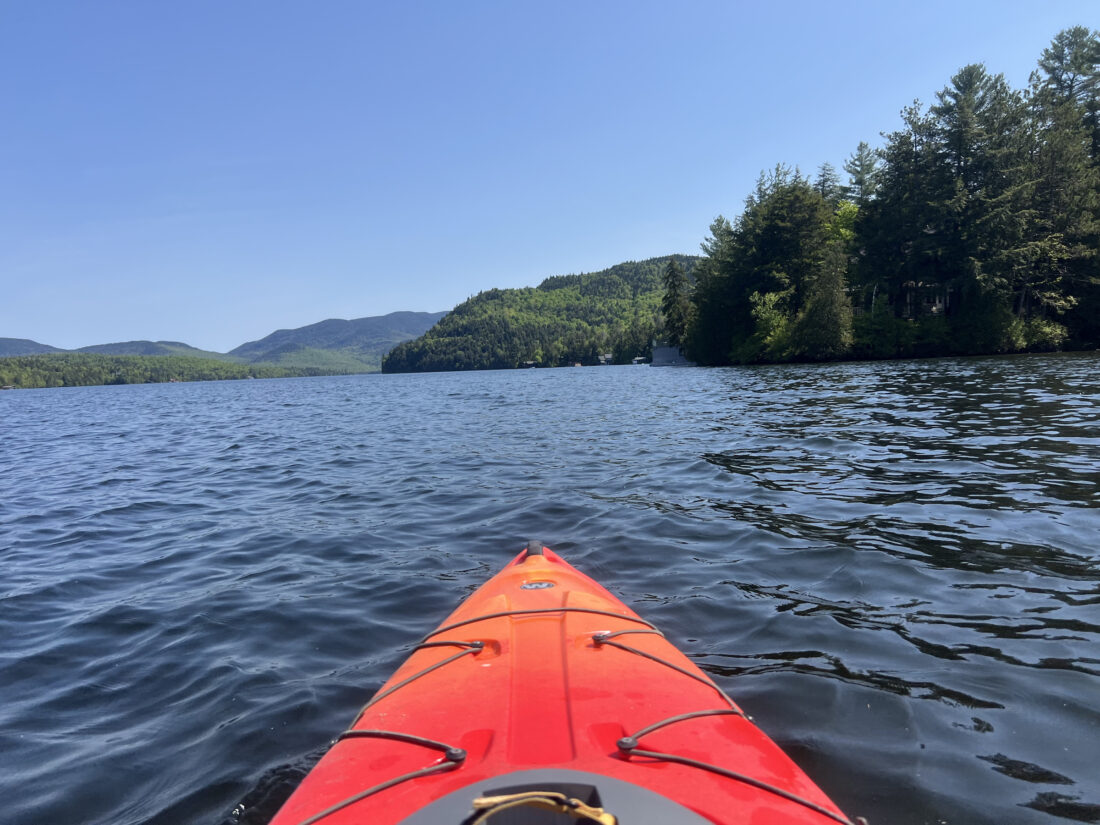
Lake Placid's East Lake is seen facing southwest from near Hopping Bear Point on Tuesday, June 3. (News photo — Chris Gaige)
Local News
USA Luge’s Running of the Balls on Saturday
LAKE PLACID —On Saturday, more than 1,000 lacrosse balls will cruise down the Mount Van Hoevenberg track to ...
Lake Placid hosts Luge World Cup

‘Miracle on Ice’ gold medal moment

Mirror Lake Inn gets in the holiday mood
Cashman settling in as region’s newest Assemblymember
SARANAC LAKE — State Assemblyman Michael S. Cashman, D-Plattsburgh, didn’t have too much time to celebrate his ...