Plants for pollinators
AdkAction readies for pollinator plant sale on Saturday, June 3
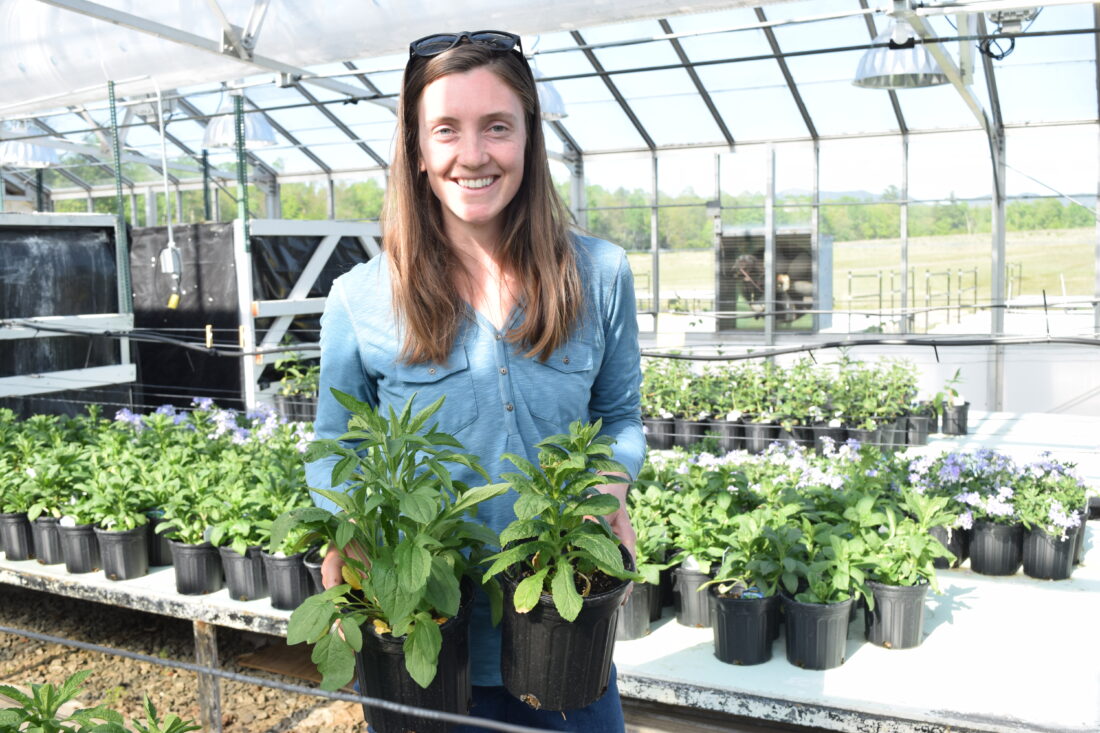
Hannah Grall, the program coordinator for AdkAction, smiles with a couple of pollinator-friendly native plants at the Uihlein Farm greenhouse in Lake Placid on Monday, May 29. AdkAction is selling around 2,200 native flowering plants of 14 different varieties during its plant sale and pollinator festival at the greenhouse from 10 a.m. to 2 p.m. on Saturday, June 3. (News photo — Lauren Yates)
LAKE PLACID — End-of-day sunshine slanted across the greenhouse at the Uihlein Farm on Monday, May 29 as Hannah Grall doused more than 2,200 plants with a much-needed drink from her sprinkler. In less than a week, many are expected to be sold for pollinator gardens across the region.
The day had been hot, but the evening was cool. After Grall cut off the water supply, you could almost hear the plants stretch, luxuriating in the extra moisture. The scene was so peaceful, you might hardly notice the swarm of blackflies hanging around.
Grall is the project coordinator for AdkAction. She was nursing 14 different varieties of native pollinator plants for AdkAction’s upcoming annual pollinator plant sale, which will be held at the Uihlen Farm Greenhouse at 281 Bear Cub Road. The sale has run on a largely order-and-pickup basis since it started in 2018, but this year, AdkAction is throwing open the greenhouse doors for a full-on festival that will run from 10 a.m. to 2 p.m. on Saturday, June 3.
The day’s activities will include yoga next to the greenhouse, guided walks through the potato fields, gardening advice from master gardeners and composting workshops. Standing front and center, however, will be the pollinator plant sale.
During the festival, community members will have a chance to take one or more of these native plants home to provide a small haven for pollinators on their own property. Once AdkAction’s pollinator plants are transplanted in the ground, they’ll support bees, butterflies and the other insects that pollinate this region’s food supply. All the proceeds from the sale will go toward the Adirondack Pollinator Project, a partnership between with AdkAction, the Wild Center in Tupper Lake and Paul Smith’s College that was created in 2016 to promote advocacy for pollinator species.
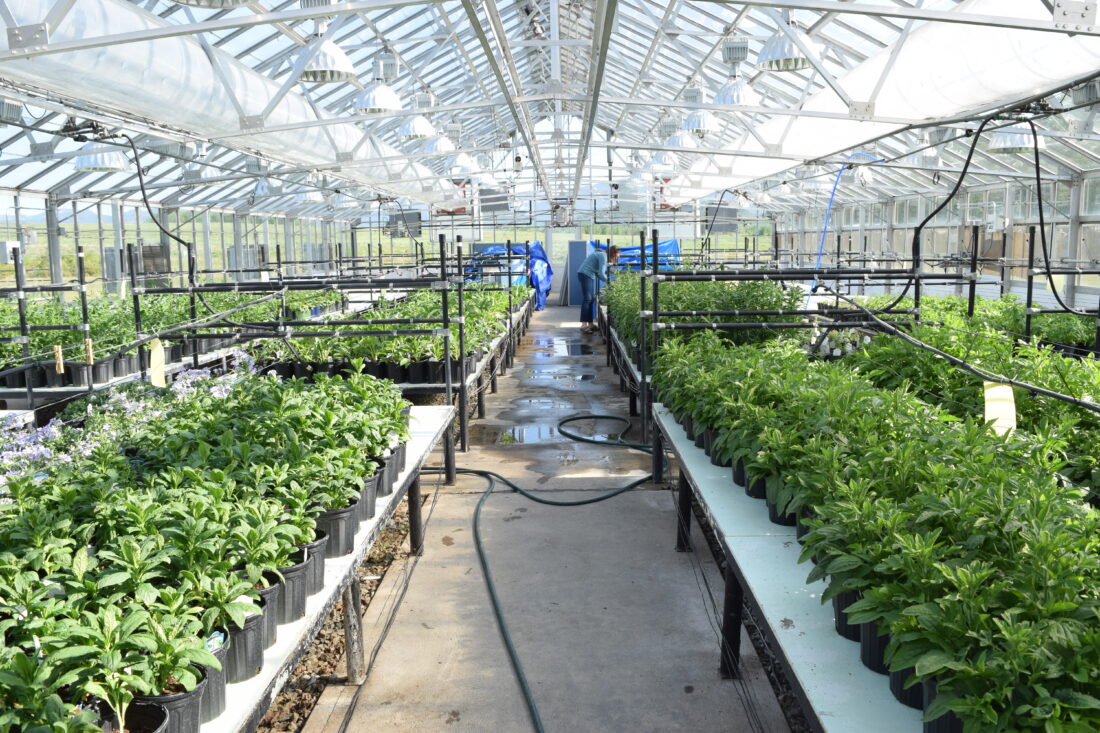
The greenhouse at Uihlein Farm is seen filled with around 2,200 plants of 14 different varieties on Monday, May 29. These plants will be available at AdkAction’s plant sale and pollinator festival at the greenhouse from 10 a.m. to 2 p.m. on Saturday, June 3. (News photo — Lauren Yates)
–
Why feed pollinators?
–
The term “pollinator” is thrown around a lot in the gardening world. The general gist is that these plants provide a food source for honeybees and other pollinating insects that are good for the garden. In fact, pollinators like migratory monarchs and native moth and bee populations are essential to human life in the Adirondacks.
Most food crops don’t just churn out fruits and vegetables — they first produce flowers. Tomato, zucchini, pumpkin and other plants produce flowers that will quickly die and, in their stead, a small fruit will begin to grow. But that’s only if a pollinator insect swings by the plant and pollinates those flowers. Without pollination, many of those crops would never produce food. Around 70% of our food needs to be pollinated, according to Lisa Salamon, an AdkAction board member.
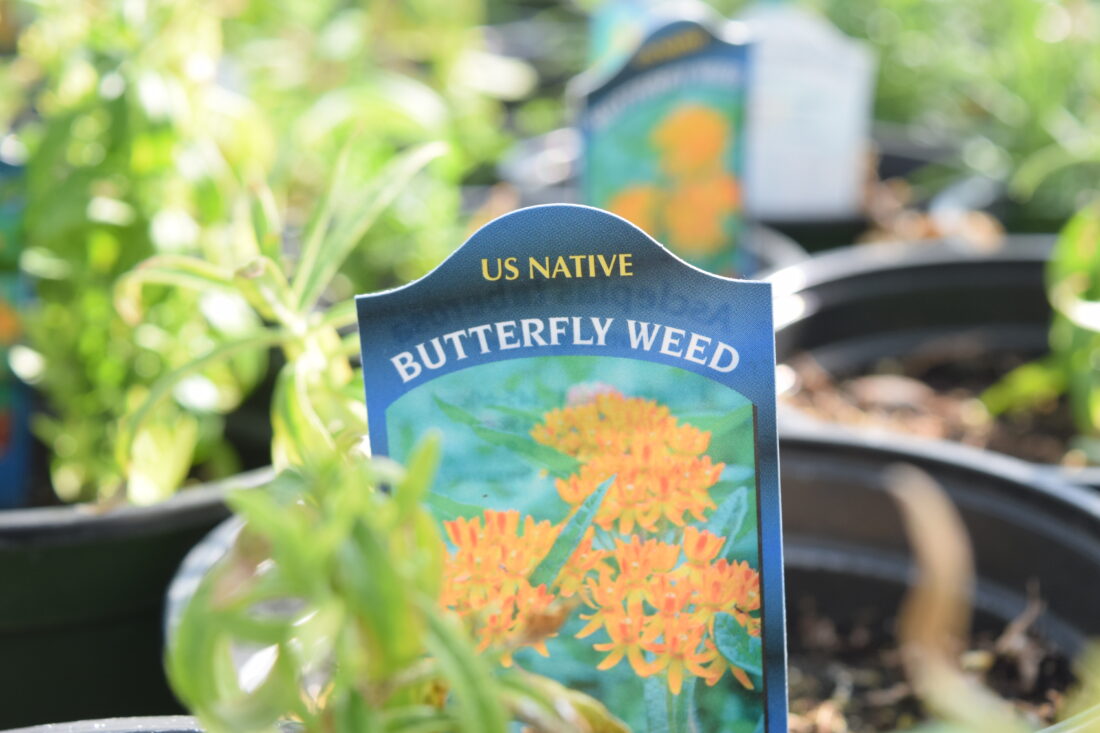
Butterfly weed (News photo — Lauren Yates)
But pollinator species are being threatened every day by climate change, habitat loss from human development, pesticide use and disease. In the Adirondacks, native bees often hibernate in hollow plant stems and leaf piles, which are often disturbed during spring cleaning and what’s become a common practice of leaf blowing, and neonicotinoids — an insecticide commonly used at nurseries across the U.S. — is notorious for killing native insects with a bite of a leaf or a drink of nectar.
“It’s very important that you know the parentage of your plants when planting for pollinators,” Salamon said.
That’s where the Adirondack Pollinator Project comes in. Salamon said that planting native flowers free of neonicotinoids, like those available at AdkAction’s plant sale, can give pollinator species the boost they need to boost the region’s food supply — even if you’re just adding a few native plants in a corner of your yard.
Milkweed, for instance, is crucial to monarch butterfly populations because it’s their one and only host plant for reproduction. Fall-blooming goldenrod is essential for the monarchs as they build the strength to migrate south. And even if you plant a small patch of these plants, Salamon said, the butterflies will often find them and return back for nesting and feeding every year.
Most of Salamon’s property in the Essex County town of Minerva is filled with native pollinator plants. She’s seen a single purple coneflower covered in three native pollinator species at once: a bald-faced hornet, a bumblebee and a skipper butterfly.
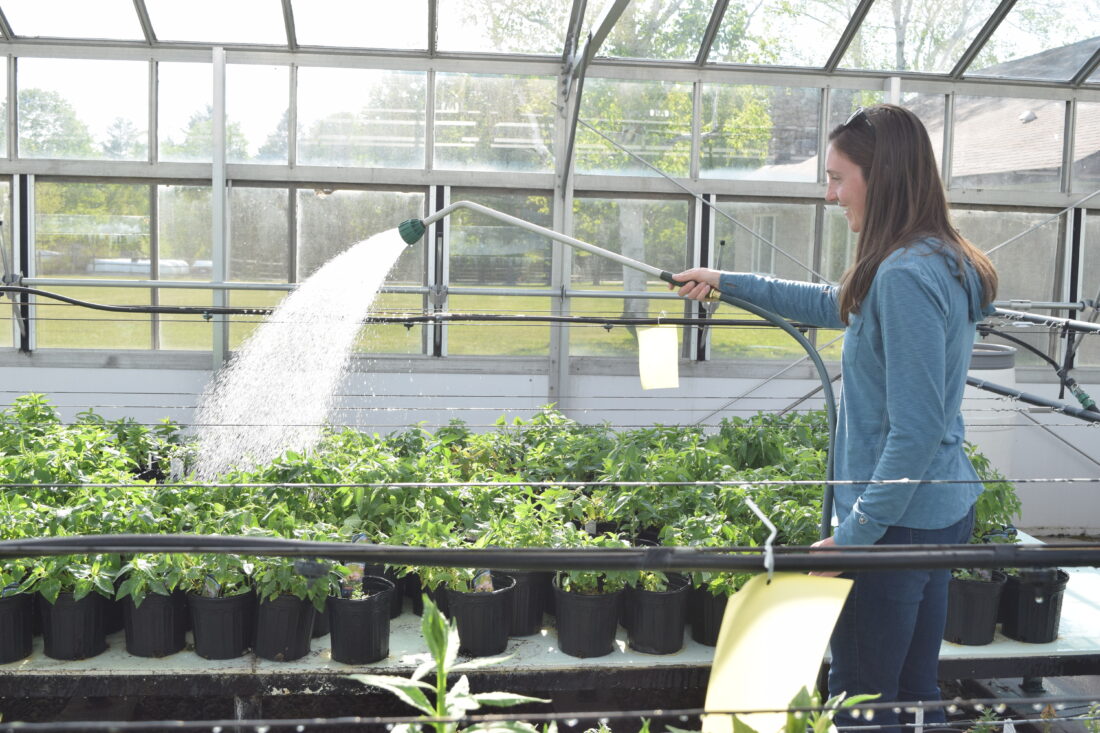
Hannah Grall, the project coordinator for AdkAction, waters a batch of pollinator-friendly native plants at the Uihlein Farm greenhouse in Lake Placid on Monday, May 29. AdkAction is selling around 2,200 pollinator-friendly native plants at a plant sale and pollinator festival at the greenhouse from 10 a.m. to 2 p.m. on Saturday, June 3. (News photo — Lauren Yates)
Grall said she planted some cardinal flower in her yard last year, and all sorts of pollinators — butterflies, bees and hummingbirds — stopped for a pollinating session at the plant’s flowers.
–
Adirondack Pollinator Project
–
AdkAction’s pollinator plant sale is just one piece of the Adirondack Pollinator Project’s efforts. The organization often hosts a table at farmers markets and festivals to promote the project with free packets of native wildflower seeds and information about how individuals can boost pollinator species on their own properties. The project is also responsible for the installation of pollinator gardens around the Adirondack Park.

Pollinators on a purple coneflower (Provided photo — Lisa Salamon)
To date, the pollinator project has distributed 70,000 native wildflower seed packets, sold 7,678 pollinator-friendly plants, and planted 26 demonstration pollinator gardens in Adirondack communities, according to AdkAction’s website. This year, the pollinator project got a grant for a “library buzz program” — they’re sending seed packets, posters, and books to 21 libraries across the Adirondacks to promote pollinator week, which is the week of June 20. They’re even putting on “pollinator happy hours,” where people can gather for a drink and a pollinator talk.
“Because you can’t have hops in beers without pollinators,” Salamon said.
The pollinator project is also eyeing some other new efforts, like looking at how roadside spaces — which are often filled with pollinator species like milkweed and goldenrod — could be better preserved for pollinators. Salamon said the pollinator project is also looking at installing pollinator gardens on capped landfills — old open-air dumps that have been covered in soil — across the Adirondacks. Salamon wants to approach municipalities about installing native plants in their landscapes instead of putting in plants from China or Japan, most of which are relatively useless to native pollinator species.
–
Plant sale/festival details
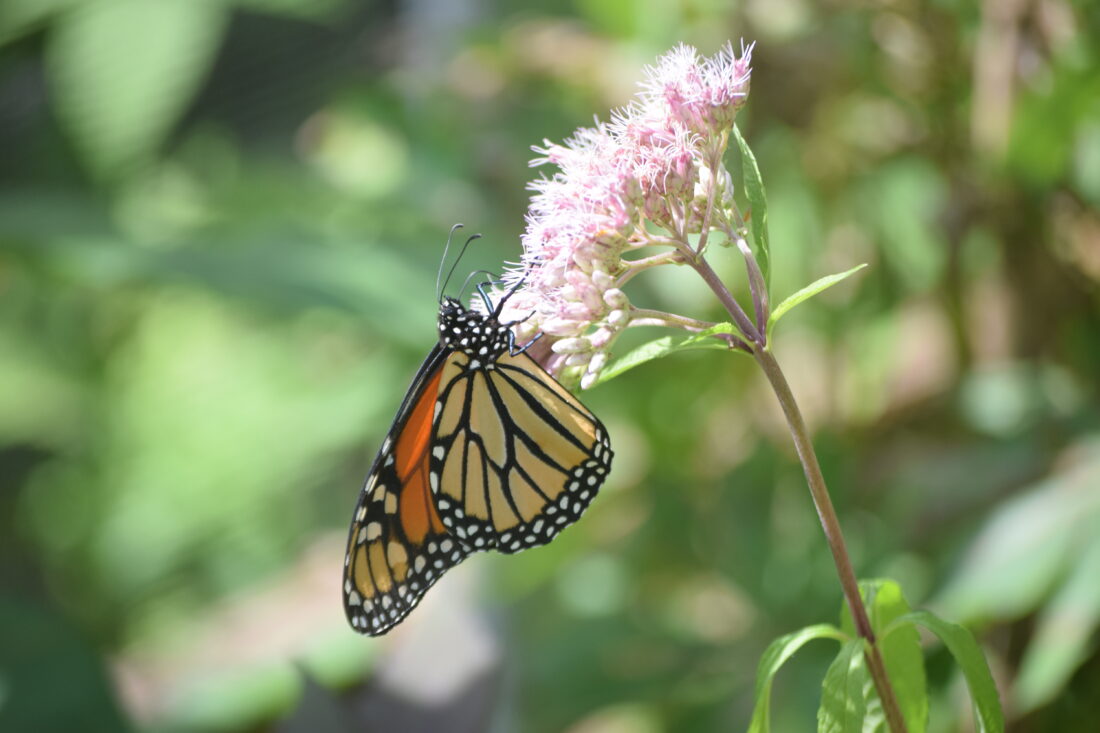
Monarch butterfly (News photo — Lauren Yates)
–
ADKAction is selling 14 varieties of native pollinator-friendly plants this year:
-Butterfly weed, a variety of milkweed
-White turtlehead
-Zigzag goldenrod
-Wild bee balm
-Little bluestem grass
-Foxglove beardtongue
-Golden groundsel
-Brown-eyed susan
-Helen’s flower
-Great blue lobelia
-Cardinal flower
-Purple coneflower
-White wood aster
-Blue moon woodland phlox
Plants can be preordered online at www.adkaction.org/plantsale and must be picked up at the Uihlein greenhouse on June 3. Alternate pickup arrangements can be made with AdkAction by emailing info@adkaction.org.
–
Festival details
–
On June 3, Cornell Cooperative Extension Master Gardeners will be at the festival to offer gardening advice. Kids can take home free wildflower seed packets, participate in activity stations to learn about pollination, and get their faces painted with flowers, butterflies, bees, and other pollinator species.
Mary Bartel, of Inner Quest Yoga and Wellness Center in Saranac Lake, will provide yoga in the meadow next to the greenhouse during the festival. Registration for the 10 a.m. meadow yoga session, available at tinyurl.com/3sraw734, is encouraged. Donations of $10 or $20 for the yoga session, which will go to the pollinator project, are also encouraged.
Adirondack scientist Ray Curran will lead a grasslands walk around the farm at noon. Preregistration for the walk, available online at tinyurl.com/4rjz4342, is encouraged.
AdkAction’s Compost for Good team will teach festival attendees about composting to restore Adirondack soils and how to use compost in a pollinator garden. Locally made compost will also be available to buy at the festival at a “bag your own compost” booth by Blue Line Compost.
For more information, visit www.adkaction.org.
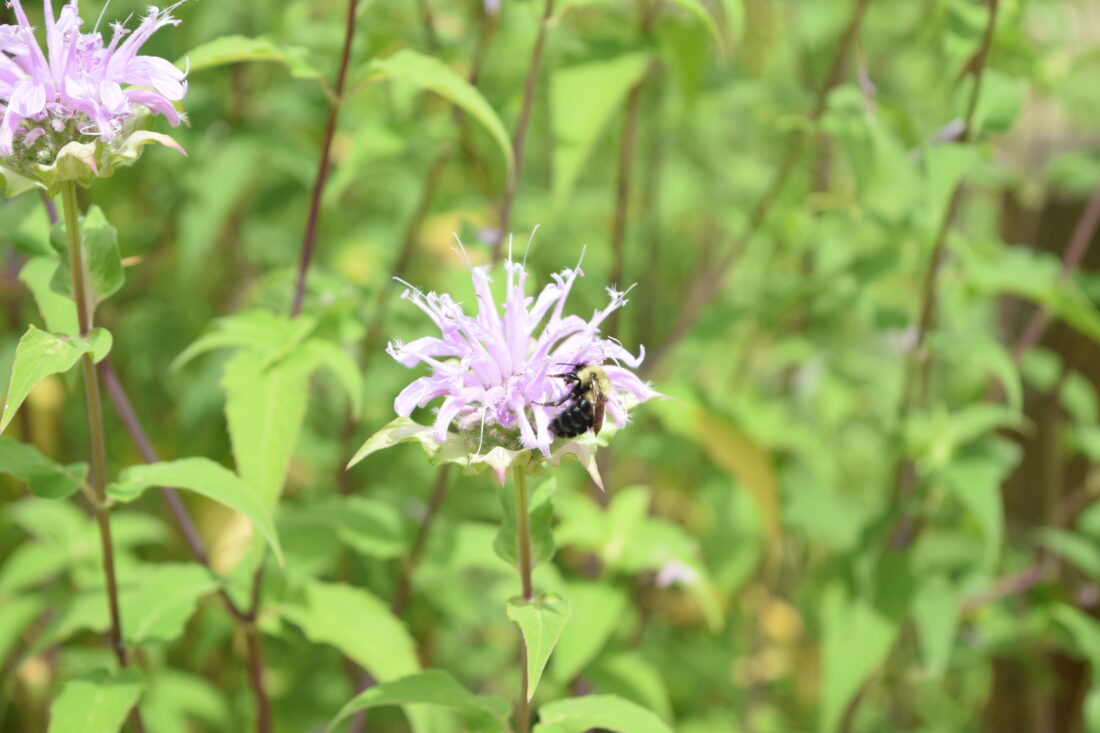
(News photo — Lauren Yates)
Local News
VISITING LAKE PLACID : A different world: A winter climb up Mount Colden
KEENE — My heart pounded, not from the 2,500 or so feet we had ascended over the last couple of hours, but for ...
Forest ranger recalls saving hiker lost for two days in Dix Range
Snowshoer found dead in lean-to in Pharaoh Lakes Wilderness
SCHROON — A Florida man was found dead in a lean-to in the 44,400-acre Pharaoh Lakes Wilderness in southern Essex ...
Ad’k Life announces photography contest winners
Some see Olympic blueprint for a 3rd Lake Placid games
CORTINA D’AMPEZZO, Italy — Imagine: A sprawling world-class city and a small mountain village with a rich ...