UP CLOSE: Cemetery stroll
Guide uncovers local connections at North Elba Cemetery
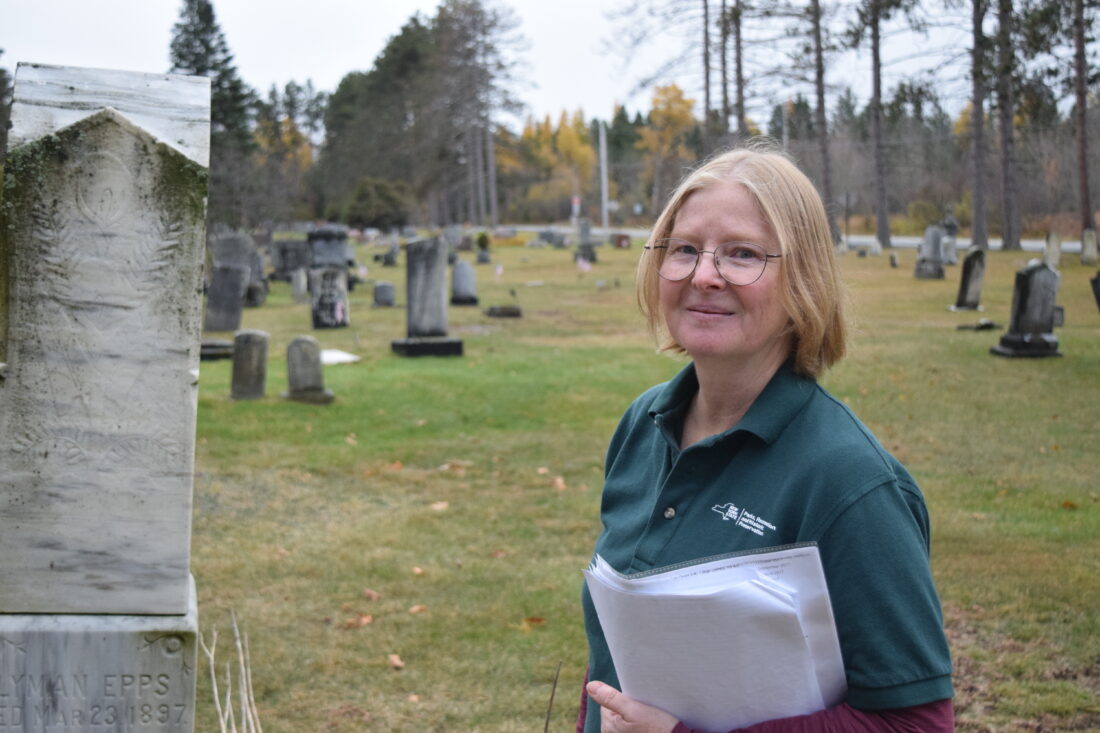
Cheryl Craft smiles Monday, Oct. 24 in the North Elba Cemetery near the grave of Lyman Epps Sr., one of the first Black settlers and lifelong residents of North Elba. Craft, who is a house guide and interpretive assistant at the John Brown Farm State Historic Site, started giving tours of the North Elba Cemetery this year after visiting Epps’s grave and being inspired to research more about the cemetery’s history. (News photo — Lauren Yates)
LAKE PLACID — The first time Cheryl Craft visited the North Elba Cemetery, she was searching for one person’s grave: Lyman Epps, one of Lake Placid’s earliest Black settlers. But she found that the cemetery is filled with other local history, too — some that’s been well-documented, and some that’s still being discussed and discovered.
This year, Craft started offering tours of the Old Military Road cemetery on behalf of the John Brown Farm State Historic Site, where she’s worked as a house guide and interpretive assistant since 2021. Though different people have offered tours of North Elba’s cemetery through the years, Craft said she got the idea for a new tour on the way to work one day. She didn’t want to offer the tours as a tourist attraction; she wanted to explore the connections local people might have with the cemetery’s earliest history.
“(I thought that) maybe some local people, more than tourists, would be interested in some of this background, because a lot of people here have ancestors buried in this section of the cemetery,” Craft said at the cemetery on Monday, Oct. 24, motioning to a swath of graves in the west portion of the cemetery — what she calls the “original” section of the site.
Craft said her interest in local history was ignited by a few different things — she read “Cloudsplitter,” a novel by Russell Banks that fictionalizes the life of John Brown. She worked for years in the lab at the now-defunct Cornell University’s Uihlein Potato Research Station on Bear Cub Lane, and she often cross-country skied by the nearby John Brown statue. She’d also seen the Dreaming of Timbuctoo exhibit, which now has a permanent home at the John Brown Farm, in 2001. John Brown history had become a theme throughout her life. She did some research into local history in her spare time while she worked at the lab, but her knowledge of local history started deepening after the lab closed and she started work at the John Brown Farm, where John Brown is buried. Craft said that her North Elba Cemetery tours are mostly trained on the John Brown-related connections among the graves there — and there are a lot — but she’s discovered more connections to living local families that motivate her to keep researching.
Craft has noticed some themes among the first people buried in the North Elba Cemetery. She said there was a strong anti-slavery sentiment among the early families in North Elba, and many of the first men buried here fought to abolish slavery by joining Union forces during the Civil War. The American Legion has placed bronze markers throughout the cemetery recognizing these graves.
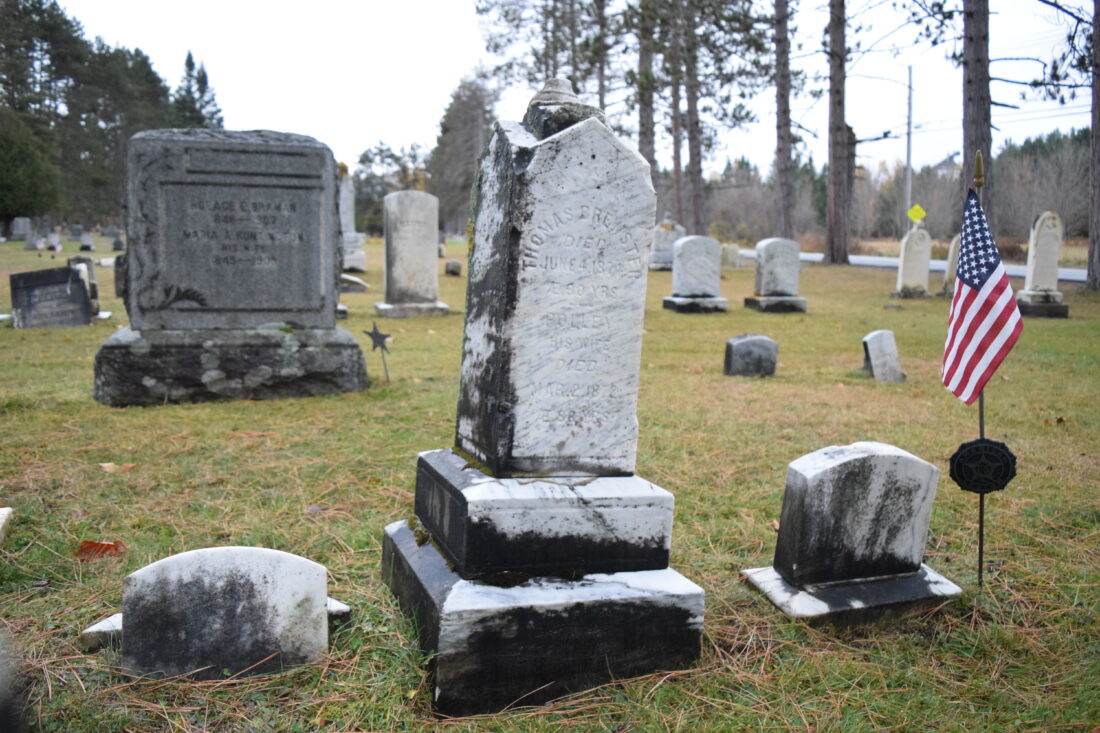
The joint headstone for Thomas and Polley Brewster, who died in 1874 and 1872, respectively, is seen here at the North Elba Cemetery on Monday, Oct. 24. There are several plots of Brewsters throughout the cemetery. (News photo — Lauren Yates)
“A lot of people from this area were willing to go fight,” she said.
Craft has also noticed that her tours have a strong bias toward men when talking about history in North Elba. But that’s not because she wants to leave women out of her conversations. Craft said the historical record of the women buried here isn’t as well-known as the history of men who settled in the town.
Craft’s first cemetery tour was on Memorial Day weekend. A couple of people who work at the Lake Placid Public Library attended the tour, and Craft said they added some historical insight to the tour. That back-and-forth was exactly what Craft wanted to generate with her tours.
“That’s kind of what I was hoping for, really — to sort of spark discussion among people,” she said.
Craft said her tours generally last around an hour and a half, adding that “If people do know families around here, you end up talking more.”
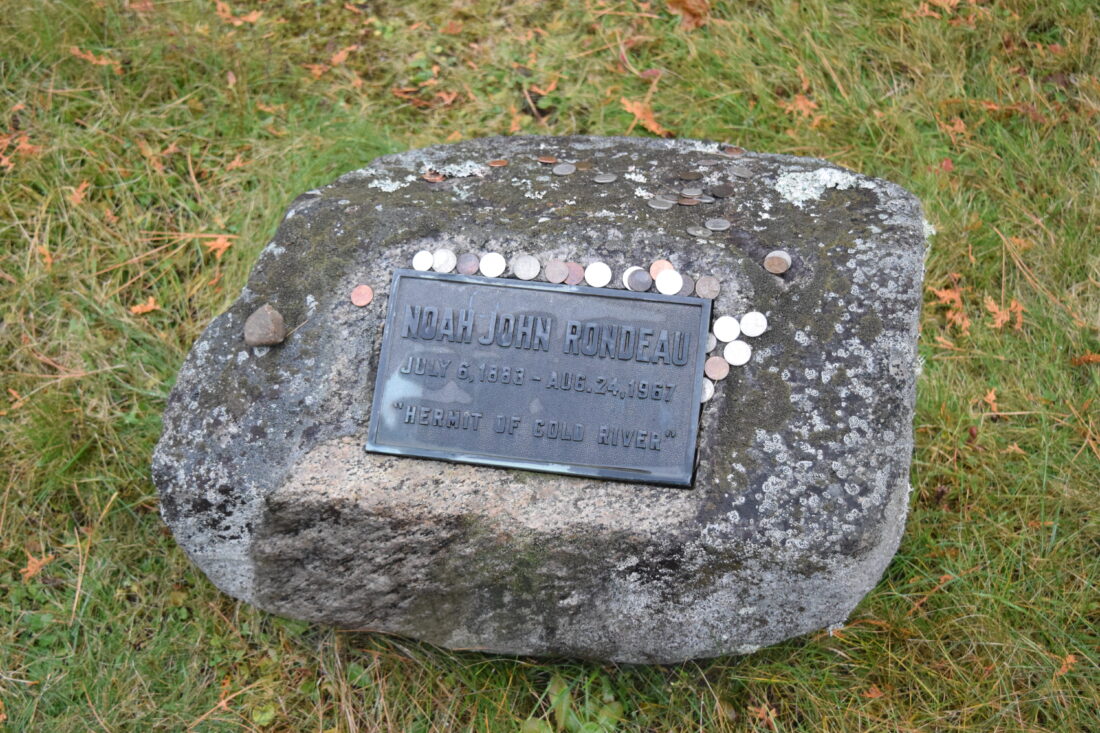
Adirondack hermit Noah John Rondeau is buried near the chapel in the North Elba Cemetery. His headstone is seen here Monday, Oct. 24. (News photo — Lauren Yates)
Some of the highlights of the cemetery tour included:
– Lyman Epps Sr. His grave in the Epps family burial plot is in the old section of the North Elba Cemetery. He was the reason Craft came to the North Elba Cemetery in the first place. Epps settled in North Elba with his wife and children in 1849 after moving from Troy. He was one of many to receive a land grant from abolitionist Gerrit Smith to help create a community of free Black men — called Timbuctoo — so they could earn the right to vote. He was one of the area’s first lifelong residents and one of the founders and early trustees of the Lake Placid Public Library. He was a teacher, farmer and guide in the High Peaks. When Epps’s son, Lyman Epps Jr., died in 1942, he was the oldest resident of North Elba at the age of 102. Well known for singing at John Brown’s funeral in 1859, he was buried in the family plot.
– The Brewster family. Craft said there are Brewsters scattered all over the North Elba Cemetery because they have connections with so many other local families. Brewsters were the first people to be buried in the cemetery, according to Craft. The Brewster story in North Elba stretches back to the 1800s, when Benjamin Brewster and Joseph Nash established the area’s first known hotels. Craft said the Brewster ancestry has been traced back to the Mayflower, and there are still Brewsters living in Lake Placid.
– Noah John Rondeau. Born 1883 and died 1967, Craft called Rondeau the “famous Adirondack hermit.” He lived on his own in a shanty on Cold River before the state kicked him out of the woods after the Big Blowdown wind storm of 1950 leveled many trees in that region of the High Peaks. He then lived around Lake Placid, Saranac Lake and Wilmington and was a substitute Santa Claus at Santa’s Workshop.
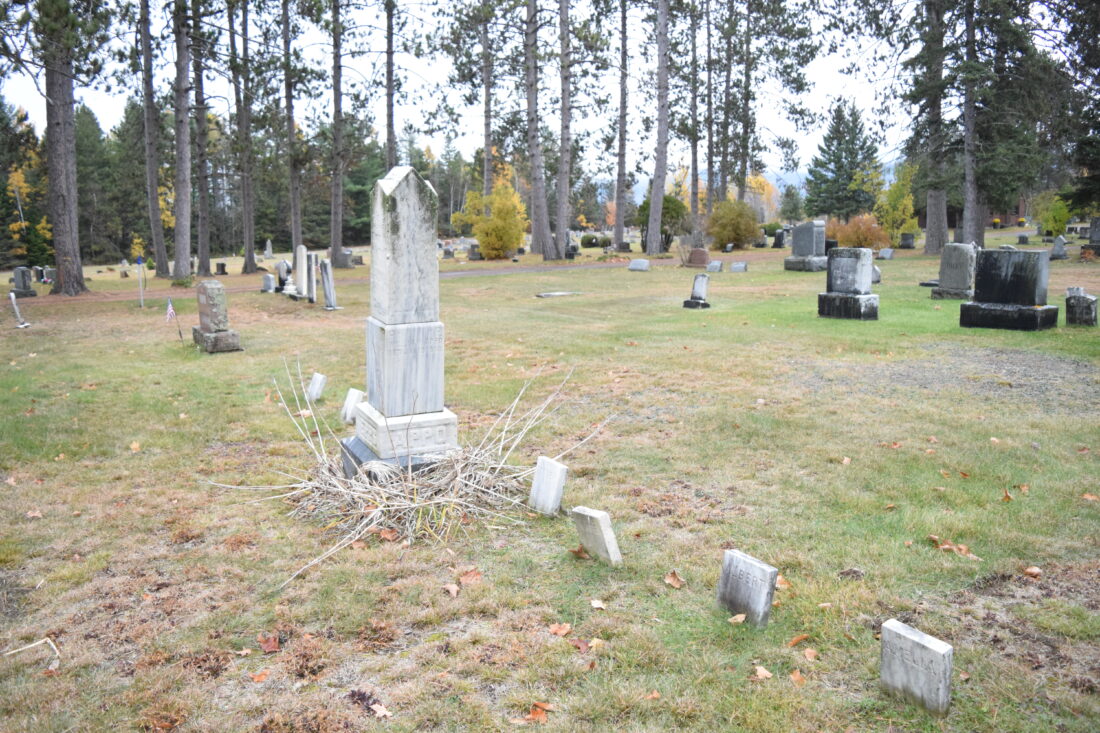
The Epps family burial plot is seen at the North Elba Cemetery on Monday, Oct. 24. (News photo — Lauren Yates)
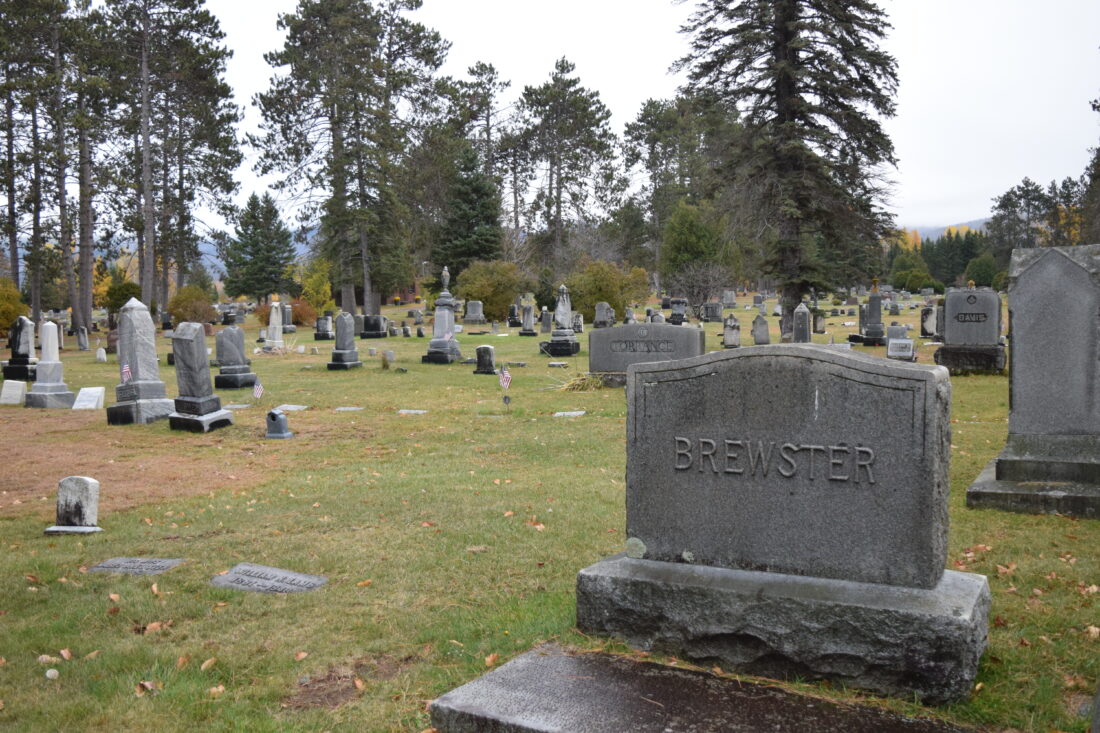
A Brewster burial plot marker is seen here on Monday, Oct. 24 in what guide Cheryl Craft calls the “original” section of the North Elba Cemetery — where many of the cemetery’s first graves were dug. There are several plots of Brewsters throughout the cemetery. (News photo — Lauren Yates)
Local News
VISITING LAKE PLACID : A different world: A winter climb up Mount Colden
KEENE — My heart pounded, not from the 2,500 or so feet we had ascended over the last couple of hours, but for ...
Forest ranger recalls saving hiker lost for two days in Dix Range
Snowshoer found dead in lean-to in Pharaoh Lakes Wilderness
SCHROON — A Florida man was found dead in a lean-to in the 44,400-acre Pharaoh Lakes Wilderness in southern Essex ...
Ad’k Life announces photography contest winners
Some see Olympic blueprint for a 3rd Lake Placid games
CORTINA D’AMPEZZO, Italy — Imagine: A sprawling world-class city and a small mountain village with a rich ...